Go Full Speed
Industry Knowledge & Resources

Apparel Manufacturing Blog & Insights

Expert advice, industry updates, cut & sew guides, and private label fashion trends.

Production & Development

Custom Apparel Manufacturing Guides

Learn how to build patterns, source fabrics, and turn designs into commercial apparel.

Private Label & Branding

Fashion Sourcing & Branding Tips

Discover tips on screen printing, embroidery, fabric sourcing, and private label scaling.

0%

Choosing the best Custom Screen Printing supplier in China requires more than comparing unit prices. Print quality, factory discipline, material control, and communication often decide whether a shipment succeeds.

Grand View Research reported that the global screen printing market was valued at approximately USD 4.8 billion in 2023. Its analysis also projects steady growth through 2030, supported by apparel, packaging, electronics, and promotional products. Smithers has separately highlighted continued demand for printed textiles, especially where durable color and flexible customization matter. These figures show opportunity, but they do not prove that every supplier is reliable.

Quality is visible in small details. Examine a supplier’s registration marks, mesh tension records, ink samples, wash-test results, and packaging photos. Ask for a production sample before approving a large order. Request evidence of color management and inspection procedures. A low quotation can hide weak curing, inconsistent placement, or expensive rework.

Screen-printing educator Andy MacDougall has described the process as “a craft, not just a process.” That distinction matters. Automated equipment improves consistency, yet experienced operators still control setup, ink behavior, pressure, and fabric response. The best Chinese supplier combines both.

No supplier is perfect. That is worth admitting. Some factories present attractive samples but struggle with repeat orders. Others communicate well but lack advanced inspection systems. Therefore, this guide compares suppliers through transparent criteria: verified experience, production capacity, technical expertise, compliance practices, sample performance, and after-sales responsibility. The strongest choice is not necessarily the cheapest. It is the partner that can reproduce your design accurately, shipment after shipment.
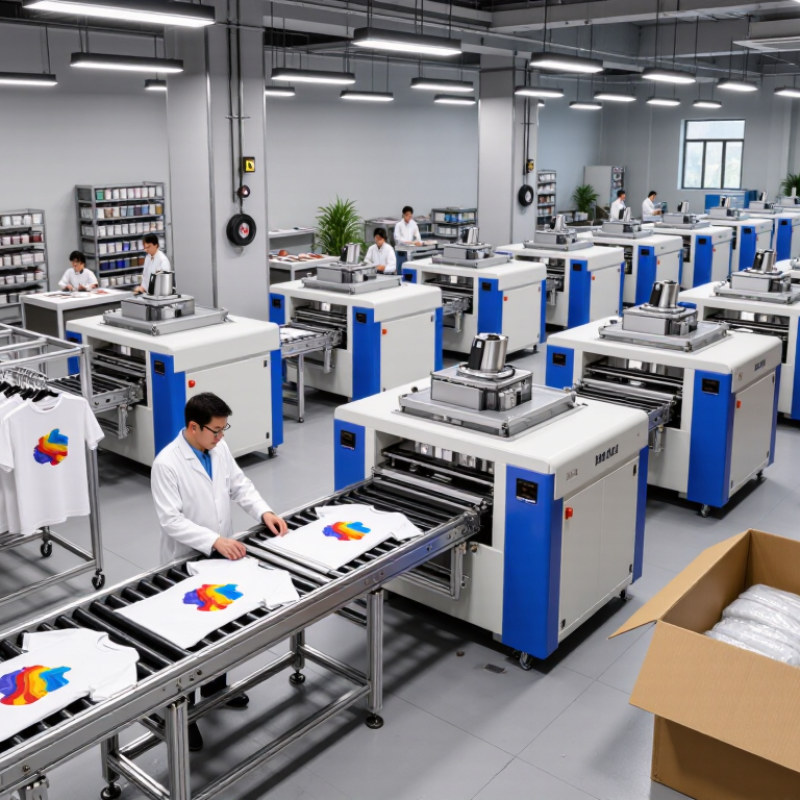
What Is the Best Custom Screen Printing Supplier in China?

Define Requirements: 120–305 Mesh, 4–12 Colors, and Target MOQ

Choosing the best custom screen printing supplier in China starts with measurable production requirements. Mesh count is a practical control point, not a decorative specification. A 120–160 mesh screen can support heavier ink deposits on fabric. Finer 230–305 mesh options may improve small details and halftones. The correct choice depends on ink type, fabric texture, and artwork complexity.

Four to twelve colors can change setup time, registration risk, and total cost. Ask the supplier how they control color alignment between screens. Request a physical strike-off or printed sample before approving bulk production. Digital previews can hide issues. They cannot show ink feel, opacity, or slight registration shifts. Color references should be documented with approved samples or recognized color standards.

Target MOQ should match your sales forecast, storage capacity, and testing budget. A low MOQ may carry higher setup costs, while a large MOQ can create unwanted inventory. Request separate pricing for 120, 240, and 500 pieces when possible. Include screen charges, sampling fees, packaging, and replacement policies in the quotation.

Some suppliers answer quickly but provide vague tolerances. That is a warning sign. A reliable partner should explain inspection points, production timing, and acceptable defects in plain language. My own judgment would remain cautious: one successful sample does not prove stable twelve-color production. Ask for process photos, inspection records, and a second sample from the same specifications.

Verify Factory Systems: ISO 9001, AQL 2.5, and Batch Traceability

What Is the Best Custom Screen Printing Supplier in China?

A reliable custom screen printing supplier should prove its factory systems, not only display attractive samples. During factory evaluations, I look for a current ISO 9001 certificate and matching production procedures. The certificate matters, but daily discipline matters more. Operators should record ink batches, mesh specifications, curing temperatures, and inspection results. Small gaps can create large quality differences.

AQL 2.5 should be clearly explained before production begins. It defines an acceptable sampling level; it does not promise zero defects. The supplier should provide an inspection plan, defect classification, sample size, and approval records. I also check whether inspectors work independently from production teams. This is not always perfect. Some factories record data carefully but review it too late. That weakness deserves direct discussion.

Tips: Request a traceability sample before placing a large order. Ask the supplier to follow one finished carton backward through its batch number, operator record, inspection sheet, and shipment date. Each printed item should connect to a production date and material record. Confirm how reprints, rejected pieces, and corrective actions are documented. A practical audit should include washing tests, color checks, registration measurements, and curing verification. Keep signed records. Photographs alone are insufficient. When a supplier welcomes difficult questions, shares controlled documents, and explains limitations honestly, its quality system becomes easier to trust.

What Is the Best Custom Screen Printing Supplier in China? - Verify Factory Systems: ISO 9001, AQL 2.5, and Batch Traceability

Verification Dimension Key Requirement Recommended Acceptance Benchmark Objective Evidence to Review Assessment
Quality Management System ISO 9001 quality management certification Certificate should be current, issued by an accredited certification body, and cover the relevant manufacturing scope and site. Valid certificate, certification-body verification, audit scope, expiry date, and manufacturing address. Required
Factory Process Control Documented control of artwork, screen preparation, ink mixing, printing, curing, inspection, and packing Approved work instructions and inspection records should exist for every major production stage. Controlled SOPs, process flow chart, operator checklists, machine-maintenance logs, and sample inspection forms. Required
Sampling Inspection ANSI/ASQ Z1.4 or an equivalent statistically defined sampling plan Sampling level and acceptance numbers must be stated on the inspection plan rather than decided informally. Purchase-order inspection standard, lot-size table, sample-size code, and acceptance/rejection criteria. Required
AQL 2.5 Major-defect acceptance level of AQL 2.5 For a general inspection level II lot of 1,201–3,200 pieces, the commonly used sample size is 125 pieces; at AQL 2.5, Ac/Re is 7/8. Inspection report showing lot size, sample quantity, defect classification, AQL level, acceptance number, and result. Required
Critical Defects Safety, regulatory, or legally prohibited defects Zero critical defects should be accepted, regardless of the general AQL result. Defect-classification procedure, product-safety checklist, restricted-substance records, and final inspection report. Zero Tolerance
Print Appearance Registration, color consistency, opacity, edge definition, and coverage Printed artwork should match the approved reference sample within the agreed visual tolerance under consistent lighting. Approved golden sample, color reference, signed pre-production sample, light-booth records, and visual inspection photos. Verify by Sample
Adhesion and Durability Ink adhesion after curing and resistance to the intended use conditions Use a documented test method agreed with the buyer, such as a cross-hatch adhesion test or wash test suitable for the substrate. Test method, substrate specification, curing-temperature record, test results, and retained production sample. Required
Batch Traceability Ability to trace finished goods back to production records Each batch should link the purchase order, production date, operator or line, substrate lot, ink batch, screen or artwork revision, and inspection result. Batch code, traveler or job card, raw-material lot records, ink-batch records, production log, and packing-list reference. Required
Raw-Material Control Identification and approval of garments, fabrics, inks, chemicals, and packaging materials Materials should be checked against approved specifications before use and held separately when nonconforming. Incoming inspection records, supplier declarations, material specifications, quarantine labels, and nonconformance reports. Required
Environmental and Chemical Controls Control of inks, solvents, wastewater, and restricted substances Applicable legal and customer requirements should be defined; chemical storage and disposal should be documented. Chemical inventory, safety data sheets, restricted-substance declarations, waste-disposal records, and training logs. Review by Market
Nonconforming Product Containment, root-cause analysis, corrective action, and disposition Defective goods should be identified and segregated; recurring defects should trigger documented corrective action. Nonconformance reports, rework or scrap records, corrective-action reports, and effectiveness checks. Required
Final Release Independent release decision before shipment Shipment should be released only after quantity, appearance, packaging, labeling, and inspection results meet the purchase-order requirements. Final-release checklist, carton inspection, quantity reconciliation, packing photos, and signed inspection approval. Required

Note: AQL values are sampling-plan parameters, not a guarantee that every unit is defect-free. The applicable sample size and acceptance numbers must be selected from the agreed inspection standard according to the actual lot size and inspection level.

Assess Ink and Safety Standards: 150–165°C Curing and OEKO-TEX

What Is the Best Custom Screen Printing Supplier in China?

A reliable supplier should treat curing temperature as a controlled production parameter, not a rough estimate. Most plastisol-style inks require approximately 150–165°C, but the ink film must reach the required temperature. A hot conveyor reading can mislead. Ask for oven calibration records, temperature profiles, and wash-test results from recent batches.

Look closely at ink safety documentation. OEKO-TEX STANDARD 100 testing evaluates textiles and components against harmful-substance limits, with stricter requirements for products touching sensitive skin. Request a valid certificate, scope, expiry date, and matching production material. A certificate alone is not enough. Check the ink’s safety data sheet, restricted-substance declaration, and batch traceability.

The wider textile industry also faces rising material pressure. Textile Exchange’s 2024 Materials Market Report estimated global fiber production at 124 million tonnes in 2023, potentially reaching 160 million tonnes by 2030. This makes responsible chemistry and waste control increasingly important. A capable supplier should record ink usage, screen-cleaning methods, rejected pieces, and curing defects.

Ask for physical samples.

Inspect the print under bright light. Rub it, stretch it, and wash it. Small cracks often reveal weak curing or excessive ink thickness. I would also request independent laboratory testing for selected orders. It costs more, but factory paperwork can be incomplete. Suppliers should welcome that scrutiny rather than treating it as distrust.

Evaluate Samples Through 20–50 Wash-Cycle Durability Testing

What Is the Best Custom Screen Printing Supplier in China?

A reliable supplier should provide production samples before accepting a large order. I inspect the ink coverage, edge sharpness, fabric feel, and print alignment. A bright sample can look excellent on delivery. It may still fail after repeated washing. That is why I request at least three identical samples from the same production process.

I test samples through 20–50 wash cycles, using a documented method. Each cycle includes a fixed water temperature, measured detergent, and consistent drying conditions. After every five cycles, I check cracking, peeling, fading, stiffness, and color transfer. I also photograph the print under the same lighting. Small changes become easier to compare. For demanding garments, I record color readings when suitable equipment is available. Visual inspection alone can miss gradual fading.

The supplier should explain the ink system, curing temperature, fabric preparation, and quality checkpoints. Their answers should match the test results. One useful sample is not enough. Ask for repeat testing on different garment colors and fabric blends. I once judged a print too quickly because it survived twenty cycles. At cycle thirty-five, the fine lettering began to split. That result was disappointing, but useful. It showed that a supplier’s durability claim needs evidence, not confidence. A dependable partner accepts reasonable retesting and shares production records without avoiding difficult questions.

Custom Screen Printing Durability Benchmark

Average visual color-retention benchmarks after repeated home-laundry washing. Higher values indicate better resistance to fading and print degradation. Samples should be evaluated at 20, 35, and 50 wash cycles before selecting a supplier.

Metric: retained visual color density as a percentage of the unw washed print. The comparison covers common screen-printing methods rather than individual companies or brands.

Compare Pricing, Capacity, Lead Times, and Export Performance

What Is the Best Custom Screen Printing Supplier in China?

A reliable supplier should be judged beyond the lowest unit price. Request pricing by artwork, ink type, garment fabric, print locations, quantity, packaging, and delivery term. A quote can look cheap while sampling, carton, or setup fees appear later. Ask for a complete cost sheet. Compare the landed cost, not only the factory price. For repeat orders, confirm whether prices change with fabric, ink, or freight fluctuations. That detail matters.

Capacity affects consistency. Ask for monthly output, daily line capacity, and current booking levels. A supplier may promise 50,000 pieces but struggle with three-color registration. Request recent production photos, sample approval records, and inspection criteria. Test wash durability, color accuracy, print placement, and fabric shrinkage. Do not trust photos alone. An independent inspection can reveal uneven ink coverage or weak packaging. Also confirm backup equipment and trained operators. Capacity on paper is not capacity during peak season.

Lead time should include sampling, material purchasing, production, inspection, and export handling. Schedules vary by design complexity and order size. Get milestone dates in writing. For export performance, review commercial invoices, packing lists, certificates, customs data, and loading procedures. Ask for shipment references with sensitive details removed. Delays still happen. Build a buffer of several working days. My evaluation would remain cautious: a supplier can meet one urgent order and fail the next. Small trial orders and measurable service terms provide stronger evidence than confident promises.

FAQS

How should I choose the screen mesh count for custom printing?

Use 120–160 mesh for heavier ink coverage on textured fabric. Choose 230–305 mesh for small details or halftones. The best option depends on fabric, ink, and artwork. It is not always obvious.

Does using more colors increase production risk?

Yes. Four to twelve colors can increase setup time, alignment risk, and production costs. Ask how the supplier controls screen registration. Request a physical printed sample before approval. Digital previews can hide problems.

What should I check on a physical print sample?

Check ink feel, opacity, color accuracy, and slight registration shifts. Compare the sample with an approved color reference. Hold the fabric under normal lighting. Small differences may matter.

How can I set a sensible minimum order quantity?

Match the quantity with your sales forecast, storage space, and testing budget. Request prices for 120, 240, and 500 pieces. A low quantity may increase setup costs. A large order may create unwanted inventory.

What costs should appear in the quotation?

The quotation should separate printing, screens, sampling, packaging, and replacement costs. Ask for clear defect tolerances and production timing. Fast replies are not enough. Vague pricing needs careful review.

What quality documents should a supplier provide?

Request a current ISO 9001 certificate and related production procedures. Ask for ink batch records, mesh details, curing temperatures, and inspection results. Documents should match actual factory practice. Paperwork alone proves little.

What does AQL 2.5 actually mean?

AQL 2.5 defines an acceptable sampling level. It does not promise zero defects. Confirm the defect categories, sample size, inspection plan, and approval records. Ask whether inspectors work independently.

How can I verify production traceability?

Ask the supplier to trace one finished carton backward. Records should connect its batch number, operator, materials, inspections, and shipment date. Confirm how rejected items and reprints are recorded. Photographs are insufficient. Keep signed records.

Conclusion

Choosing the best Custom Screen Printing supplier in China requires a structured evaluation rather than relying on price alone. Start by defining your production needs, including a suitable mesh range of 120–305, the number of colors required, and a realistic target MOQ. Then verify the factory’s quality systems, such as ISO 9001 certification, AQL 2.5 inspection practices, and reliable batch traceability. These standards help ensure consistent output and make quality issues easier to identify and resolve.

You should also assess ink safety, curing performance at approximately 150–165°C, and OEKO-TEX compliance when relevant to the product. Request samples and conduct durability testing across 20–50 wash cycles to evaluate color retention, adhesion, and overall print strength. Finally, compare quotations alongside production capacity, lead times, communication efficiency, and export experience. A dependable supplier should offer transparent pricing, stable manufacturing resources, predictable delivery, and consistent quality from sampling through mass production.


Charlotte

Charlotte

Charlotte is a professional marketing specialist dedicated to helping businesses understand products, markets, and customer needs with clarity and confidence. With strong knowledge of the company’s solutions, she regularly contributes expert articles to the company website, offering practical......