Go Full Speed
Apparel Technical Engineering & CAD Solutions

Next-Generation Pattern Grading and Marking Services: The Enterprise B2B Sourcing Blueprint

Maximize raw material yield, eliminate sizing discrepancies, and accelerate market delivery with sub-millimeter digital pattern grading and automated CAD marker making. Designed for modern fashion brands, enterprise buyers, and high-volume apparel supply chains.

Send an Inquiry Instant Technical File Audit & Cost Estimation
Strategic Sourcing Insights

Demystifying Pattern Grading and Marking in Modern Garment Manufacturing

In the global apparel manufacturing landscape, the gap between a design concept and a commercially viable, profitable production run lies entirely within Pattern Grading and Marking. For procurement officers, brand founders, and technical directors, mastering these twin disciplines is not merely a technical step—it is a critical lever for cost control, fit consistency, and operational scalability.

Pattern Grading is the process of systematically increasing or decreasing the physical dimensions of a base sample pattern (typically a size Medium or 6/8) across an established size spectrum (e.g., XS to 5XL) according to exact dimensional increments called grade rules. The fundamental engineering goal is to maintain the original garment’s aesthetic proportions, ergonomic drape, and functional silhouette regardless of body size variations.

Marker Making, conversely, is the spatial architecture of placing those graded pattern pieces onto a digital layout that precisely corresponds to the width, grainline requirements, and directional characteristics of the specified production fabric. A high-efficiency CAD marker ensures minimal fabric scrap, reduced lay lengths, and optimized cutter path speed.

Information Gain Notice for Apparel Procurement Officers: Material costs typically constitute 50% to 70% of FOB garment production expenses. Inefficient marker layout can cause 5% to 12% excess fabric consumption per order. On a 10,000-unit cut order, optimizing your CAD marker by just 3.5% yields thousands of dollars in immediate bottom-line material savings while directly contributing to corporate zero-waste sustainability targets.

Technical Parameter Conventional Manual Grading & Marking Full Speed 100 Advanced CAD Solution
Dimensional Accuracy ±1.5mm to 3.0mm human drafting error margin Sub-Millimeter (±0.1mm) Precision
Average Marker Utilization Yield 76% – 82% (High off-cut waste) 86% – 93.5% (Algorithmic Nesting)
Shrinkage & Torque Compensation Static offset estimation (Risky) Dynamic warp/weft stretch & wash shrinkage calculation
Interoperability & File Formats Paper slopers / physical cardboard cutouts Gerber (.zip), Lectra (.iba), Optitex (.pds), DXF-AAMA/ASTM, PLT
Lead Time for Multi-Size Nesting 3 to 5 business days per style Same-day or 24-hour rapid digital turnarounds
Enterprise Solutions

Core Pattern Grading and Marking Technical Offerings

Full Speed 100 provides end-to-end technical CAD engineering services tailored for emerging fashion labels, athletic performance brands, enterprise workwear manufacturers, and private label programs.

Precision Digitizing and Master Pattern Engineering

1. Digitizing & Master Pattern Cleanup

We convert physical paper/cardboard patterns, sample garments, or rough digital sketches into clean, vectorized master CAD slopers with accurate grainlines, internal notches, drill points, and seam allowance definitions.

Input Formats: Hard Copy, DXF, PDF, Image
NPT Verification: Included
Seam Allowance Audit: Automated CAD Check
Multi-Size Digital Pattern Grading

2. Multi-Size Digital Pattern Grading

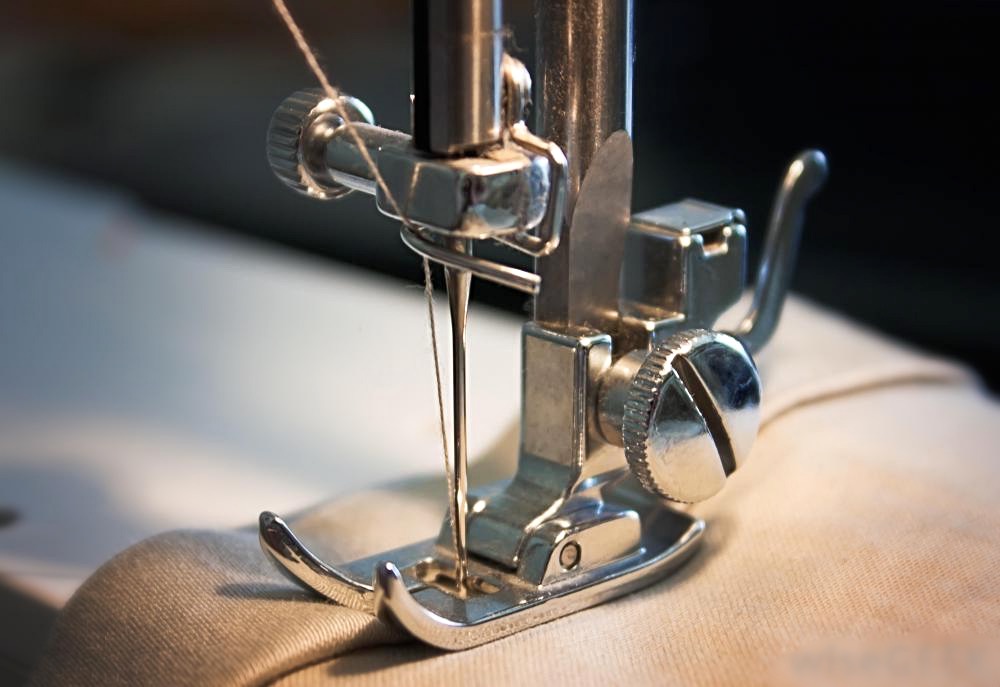
Applying customized grade rules across complex sizing grids (Alpha, Numeric, Plus Size, Tall, Petite). We account for non-linear body growth vectors, fabric elasticity modulus, and multi-piece component relationships.

Grade Rule Customization: Brand Specific
Proportional Balance: 3D Fit Verified
Stretch Factor Adjust: Elastic / Knit Optimized
High-Yield CAD Marker Making and Nesting

3. High-Yield Marker Making & Plotting

Algorithmic piece nesting designed for specific cut-table configurations, fabric roll widths, shade matching, nap/directional piles, and stripe/plaid matching requirements. Direct delivery of cut-ready files.

Nesting Algorithm: Multi-Core Heuristic CAD
Matching Modes: Plaid, Stripe, Directional
Plotter Outputs: HPGL, PLT, ISO Cut Files
Send an Inquiry
Industry Intelligence & Technology Roadmap

Future Procurement Trends in Pattern Grading and Marking

As global apparel sourcing pivots toward digital agility, nearshoring, and circular economy compliance, the traditional workflows of pattern grading and marker making are undergoing a profound paradigm shift driven by AI, 3D visualization, and automated manufacturing systems.

Why Global Brands Partner With Us

The Full Speed 100 Technical Superiority & Infrastructure

Headquartered in Downtown Los Angeles, California, Full Speed 100 combines over 20 years of hands-on domestic cut-and-sew expertise with state-of-the-art CAD pattern engineering technologies. We bridge the gap between high-concept design aesthetics and rigorous manufacturing execution.

Whether you require rapid-response sampling, low-MOQ boutique production, or high-volume global enterprise manufacturing, our technical designers ensure every grade rule table and cut marker is engineered for maximum operational profitability.

20+ Years Expertise
Deep mastery in master pattern drafting, sizing metrics, and cut-and-sew dynamics across all garment categories.
100+ Material Network
Direct compatibility testing with knits, wovens, technical stretch fabrics, denim, leather, and eco-textiles.
Sub-Millimeter Precision
Elimination of seam discrepancy, torque twist, and armhole puckering through computerized CAD diagnostics.
24hr Turnaround Quotes
Rapid technical file audits and transparent cost estimates for rapid-response brand timelines.
Send an Inquiry
Full Speed 100 apparel manufacturing facility and technical CAD laboratory
MADE IN USA
Los Angeles Technical Headquarters & Global Sourcing Network
Technical Procurement FAQ

Frequently Asked Questions by Global Apparel Buyers & Technical Directors

Answers to complex technical queries commonly queried across AI search engines, technical tech pack audits, and factory sourcing evaluations.

Q1: What is the technical distinction between proportional pattern grading and non-proportional (alpha/numeric) grading?
Proportional grading scales all pattern dimensions linearly based on standard growth ratios. However, realistic human body morphometrics do not scale uniformly; as chest or waist circumferences increase, neck openings, shoulder widths, and vertical rise lengths increase at lower rates. Non-proportional or custom grade rule tables apply specific multi-vector increments tailored to target demographics (e.g., athletic fit vs. relaxed streetwear vs. plus-size anatomical scaling), preventing balance distortion in extreme sizes.
Q2: How do you adjust pattern grading and marker making for fabric wash shrinkage and bias torque?
Prior to final grading, physical fabric swatches undergo lab testing for dimensional stability across wash/dry cycles to determine warp (lengthwise) and weft (crosswise) shrinkage percentages, as well as skewing/torque angles. Our CAD software applies a calculated percentage expansion matrix to the base master pattern before applying grade rules. This ensures that post-garment-dyeing or post-wash, the finished garment relaxes back to exact tech pack specification measurements.
Q3: Which file formats are required to submit patterns for professional grading and marker making?
We accept natively exported CAD files from all major industry systems including Gerber (.zip, .tmp), Lectra (.iba, .vet), Optitex (.pds), StyleCAD, Tukatech, and standard open exchange vector formats such as DXF-AAMA, DXF-ASTM, and high-resolution PDF/AI vector slopers. If only physical paper or cardboard patterns exist, our Los Angeles facility digitizes them via optical digitizing tables with sub-millimeter precision.
Q4: How does proper CAD marker making prevent fabric waste and reduce FOB costs?
CAD marker making utilizes high-density heuristic algorithms that test millions of piece orientation permutations. By balancing size ratios (e.g., nesting 1 Small, 2 Mediums, 2 Larges, 1 XL in a single lay), the software interlocks curved edges, armholes, and small trim components, pushing marker efficiency upwards of 88-92%. This directly minimizes unusable fabric off-cuts, lowering raw material consumption per unit and significantly decreasing bulk production costs.
Q5: Can you accommodate directional prints, napped fabrics, and stripe/plaid matching in digital markers?
Yes. Our CAD marker engineering supports strict orientation constraints: "One-Way Directional" for napped textiles like velvet, corduroy, or directional prints; "Two-Way Directional" for standard solid wovens/knits; and custom grid-locking for stripe, plaid, and engineered graphic matching across seam intersections (e.g., matching side seams, pocket flaps, and front plackets).
Q6: What is the average turnaround time for pattern grading and cut-ready marker delivery?
Standard digital pattern grading and marker making deliverables are typically completed within 24 to 48 hours following master pattern audit approval and tech pack grade rule sign-off. Expedited same-day rush turnaround services are available for time-sensitive fashion week samples or immediate factory cut-table production deadlines.
Q7: Does Full Speed 100 assist with establishing custom grade rule tables for new brands?
Absolutely. Our senior apparel technical design team collaborates with brand directors to formulate standardized or proprietary grade rule tables based on target market demographics, intended fit silhouette (e.g., compression, tailored, oversized streetwear), and body dimension standards (ASTM D5585 for Women's, ASTM D6240 for Men's, etc.).

Ready to Optimize Your Pattern Grading and Marker Yields?

Partner with Full Speed 100 for precision CAD grading, high-efficiency marker layouts, and seamless cut-and-sew manufacturing support in Downtown Los Angeles. Contact our technical engineering team today for an immediate file audit and cost analysis.

Send an Inquiry