Expert advice, industry updates, cut & sew guides, and private label fashion trends.
Learn how to build patterns, source fabrics, and turn designs into commercial apparel.
Discover tips on screen printing, embroidery, fabric sourcing, and private label scaling.
Global apparel buying is moving faster, but fit mistakes remain expensive. A sleeve can measure three millimeters too tight, causing rejected samples, altered grading, and delayed production. Garment Pattern Making Services help convert sketches, measurement charts, and fabric behavior into production-ready patterns. The right partner can also prepare tech packs, digital blocks, size grading, and marker layouts for factories across borders.
The business case is substantial. McKinsey and The Business of Fashion’s The State of Fashion 2025 report expects low single-digit growth for global fashion, while highlighting persistent cost pressure and supply-chain uncertainty. Textile Exchange’s Materials Market Report 2024 records global fiber production at 124 million tonnes in 2023, with demand projected to reach 160 million tonnes by 2030. Better patterns cannot solve every sustainability problem. They can reduce avoidable sampling, fabric waste, and return-related rework.
Helen Joseph-Armstrong, author of Patternmaking for Fashion Design, describes patternmaking as “the bridge between design and production.” That bridge needs more than software. It requires experienced pattern cutters who understand ease, balance, grainlines, stretch recovery, and factory limitations. Some suppliers look impressive online. Their communication may still disappoint.
This guide evaluates ten Garment Pattern Making Services for global buyers. It compares technical capability, sample accuracy, communication, turnaround, software compatibility, and production support. The ranking is not flawless. A service suited to a denim brand may fail a bridalwear project. Buyers should test one style before committing a full collection. That small step often exposes the truth.
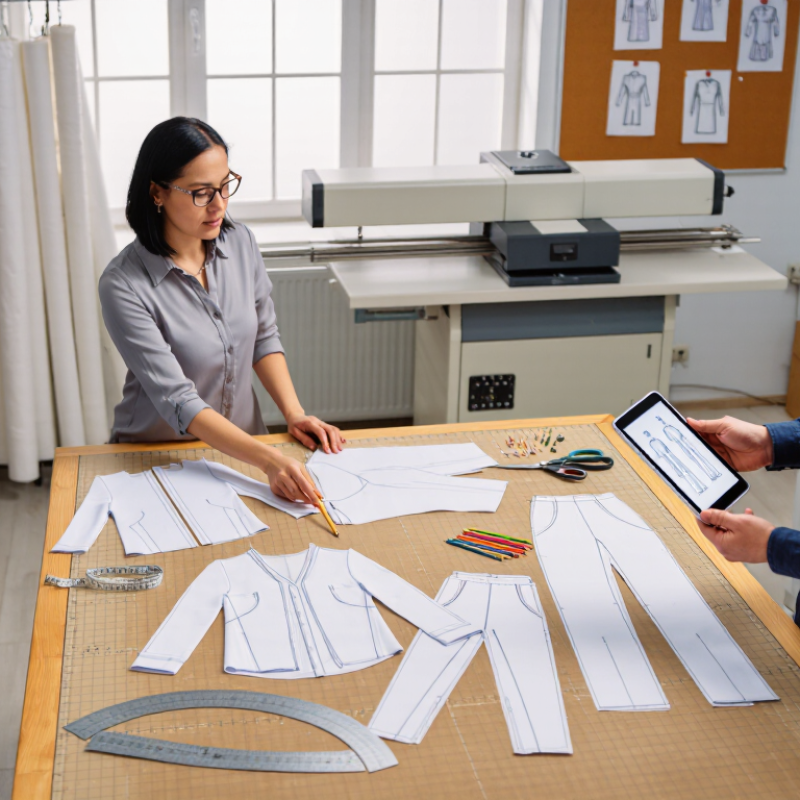
Garment pattern making services turn a design idea into measurable production instructions.
They interpret sketches, reference garments, and technical packs. Then, pattern makers create paper or digital blocks for each style. These files usually include seam allowances, notches, grainlines, and construction details.
Experienced providers also develop size grading and measurement charts. They prepare fit samples, review balance, and adjust areas such as armholes, waistlines, and sleeve caps.
Fabric behavior matters. A soft knit may need different ease than a structured woven fabric. Some services provide digital 3D samples, which can reduce physical revisions. However, virtual fitting is not perfect. Real fabric still exposes problems.
Textile Exchange’s Materials Market Report 2024 states that global fiber production reached 124 million tonnes in 2023. It may rise to 160 million tonnes by 2030.
Accurate patterns can help buyers limit unnecessary sample cutting and material waste. UNEP reports that textiles generate about 2–8% of global greenhouse gas emissions. Pattern services therefore support more controlled development, though they cannot solve every sustainability issue.
Reliable providers document revisions, confirm tolerances, and test graded sizes before production. Small errors become expensive. A two-centimeter imbalance can change fit across an entire order.
When evaluating garment pattern making providers, global buyers should examine practical evidence, not polished promises. Ask for anonymized samples showing graded sizes, seam allowances, notches, and construction notes. A capable provider should explain how measurements change across a size range. Vague answers often signal weak technical control.
Request a small test pattern before assigning a full collection. Compare the digital file with a physical sample, especially at the shoulder, armhole, waist, and hip. Ask which software and file formats they use. Their response should match your factory’s workflow. I once trusted an attractive portfolio too quickly; the first sample fit well, but the graded sizes needed several corrections. That mistake changed my evaluation process.
Communication is equally important. Reliable providers confirm specifications in writing, record revisions, and identify who approves each change. Check their experience with your fabric type, garment category, and production market. A pattern maker familiar with stretch jersey may still struggle with structured outerwear. Ask about timelines, revision limits, quality checks, and secure file handling. Request references from buyers with similar production volumes, where possible. Professional confidence is useful, but honest questions matter more. A provider who admits a limitation may be safer than one who promises everything. Keep measurements, comments, and approval dates in one shared record. Small details prevent expensive misunderstandings.
Comparative benchmark of common garment pattern-making provider profiles. Scores use a 100-point evaluation model covering technical capability, international communication, speed, scalability, fit accuracy, and value.
| Rank | Provider Profile | Best Fit for Global Buyers | Core Pattern Services | Digital Formats | Typical Lead Time | Indicative Price per Base Pattern | Grading & Size Range | Sample Support | International Communication | Evaluation Score |
|---|---|---|---|---|---|---|---|---|---|---|
| 1 | Profile 01 – Full-Service CAD Studio | Brands needing end-to-end development from sketches to production-ready patterns | Pattern drafting, corrections, grading, markers, tech-pack review, fit revisions | DXF, ASTM-AAMA, Gerber-compatible files, PDF | 5–10 business days | US$80–180 | Usually 5–9 sizes; custom ranges available | Two or more fit revisions commonly available | English email, video meetings, measurement spreadsheets | 92/100 |
| 2 | Profile 02 – 3D Virtual Sampling Specialist | Buyers seeking fewer physical samples and faster design validation | 3D pattern adjustment, avatar fitting, digital draping, physical-pattern export | CLO, Browzwear, DXF, ASTM-AAMA, PDF | 4–8 business days | US$100–250 | 3–7 sizes; grading may be quoted separately | Virtual fitting plus one physical sample review | Online review sessions and annotated digital comments | 90/100 |
| 3 | Profile 03 – Technical Outerwear Pattern Team | Performance jackets, padded garments, workwear, and outdoor products | Layered construction, seam engineering, ease analysis, pocket and hood development | DXF, ASTM-AAMA, Gerber-compatible files, PLX, PDF | 8–15 business days | US$150–350 | Usually 5–9 sizes; body-specific grading available | Prototype review and construction troubleshooting | Technical English, specification sheets, factory coordination | 89/100 |
| 4 | Profile 04 – Knitwear and Stretch-Fit Specialist | Activewear, underwear, jersey garments, and stretch fabric programs | Negative ease, stretch recovery analysis, elastic placement, fit testing | DXF, ASTM-AAMA, PDF, 3D-ready files where supported | 5–12 business days | US$90–220 | Usually 5–9 sizes; petite and extended sizes by request | Fit sample comments and stretch-performance adjustments | English measurement charts and video fitting sessions | 88/100 |
| 5 | Profile 05 – Small-Batch Development Studio | Independent labels, startup brands, and low-volume collections | Basic blocks, pattern development, sample coordination, production notes | DXF, PDF, AI, manual pattern scans | 7–14 business days | US$60–150 | Usually 3–7 sizes; extended grading may cost extra | One fit revision typically included | Email-based English communication and shared workspaces | 85/100 |
| 6 | Profile 06 – Mass-Market Production Pattern Team | Retail programs requiring repeatable grading and factory-ready output | Block development, grading, marker planning, consumption control, revisions | Gerber-compatible files, ASTM-AAMA, DXF, PDF | 10–20 business days | US$100–240 | Usually 7–13 sizes; large size runs supported | Factory sample comments and production correction cycles | Structured reports, measurement tables, regular status updates | 84/100 |
| 7 | Profile 07 – Manual and CAD Hybrid Workshop | Buyers with vintage references, artisan details, or complex draping | Manual drafting, draping, digitization, pattern correction, grading | Scanned PDF, DXF, ASTM-AAMA, paper patterns | 10–18 business days | US$90–230 | Usually 3–7 sizes; grading depends on garment structure | Toile review and manual fit correction | English documentation; physical samples may require courier shipping | 82/100 |
| 8 | Profile 08 – Uniform and Workwear Pattern Service | Corporate uniforms, medical apparel, hospitality wear, and durable basics | Functional fit, reinforcement details, pockets, plackets, repeat sizing | DXF, ASTM-AAMA, Gerber-compatible files, PDF | 8–16 business days | US$75–190 | Usually 5–11 sizes; gendered size sets available | Wear-test feedback and production sample corrections | Measurement protocols and buyer-approved specification forms | 81/100 |
| 9 | Profile 09 – Fashion Draping and Couture Development Studio | Occasionwear, structured silhouettes, tailoring, and premium fashion pieces | Draping, moulage, tailoring, asymmetry, internal structure development | PDF, DXF after digitization, paper patterns, photographed work stages | 12–25 business days | US$180–450 | Usually 1–5 sizes; commercial grading may be outsourced | Detailed toile fitting and multiple design revisions | Appointment-based communication and visual fitting reviews | 80/100 |
| 10 | Profile 10 – On-Demand Remote Pattern Service | Buyers requiring straightforward styles, quick quotations, and flexible ordering | Basic tops, skirts, trousers, dresses, simple grading, file conversion | DXF, ASTM-AAMA, PDF, AI | 3–7 business days | US$45–120 | Usually 3–7 sizes; complex grading quoted separately | One revision commonly available under the original brief | Email, messaging platforms, and shared measurement templates | 78/100 |
The 10 Best Garment Pattern Making Services help global buyers turn design ideas into production-ready patterns. Experienced pattern makers study sketches, measurements, fabric behavior, and construction details before drafting. A reliable service can create digital patterns, physical samples, size grading, and clear production notes. Small details matter, such as a sleeve opening that allows movement or a waistband that sits flat.
Strong providers usually support several garment categories, including dresses, shirts, trousers, outerwear, and activewear. Buyers should review their technical process, revision policy, measurement system, and communication speed. Ask whether patterns include seam allowances, notches, grain lines, and detailed labeling. These features reduce confusion when a factory receives the files. Practical experience also matters. A pattern may look correct on screen but fail during a fitting session.
Fit testing is essential. One sample is rarely enough. Skilled teams compare the garment against a measurement chart, mark pressure points, and adjust balance lines. However, no service is perfect for every project. A low-cost option may be suitable for a simple style but struggle with complex tailoring. I once saw a promising pattern delayed because fabric stretch was never confirmed. That mistake was avoidable. Global buyers should share fabric samples, target measurements, reference photos, and expected delivery dates. Clear input creates more dependable results.
10 Best Garment Pattern Making Services for Global Buyers
Comparing Pricing, Technology, and Production Capabilities
Selecting a garment pattern making service requires more than comparing hourly rates. In practical sourcing work, the cheapest quote often excludes grading, revisions, or production-ready files. Reliable providers explain costs for the base pattern, size range, sample fitting, and technical specifications. Ask whether they charge per style or by development stage. A clear quote reduces unexpected expenses later.
Technology can improve accuracy and shorten development cycles. Look for services using 2D CAD, 3D fitting software, digital measurement libraries, and secure file sharing. These tools help identify sleeve balance, seam placement, and ease before physical samples arrive. However, software cannot replace skilled pattern technicians. A digital fitting may look convincing, yet fabric behavior can still surprise the production team.
Production capability matters when a design moves beyond sampling. Check experience with grading, marker making, fabric consumption, sample coordination, and factory communication. Confirm minimum order expectations and whether the service supports small trial runs. This reveals practical flexibility.
Tips: Request one sample pattern before committing to many styles. Provide a complete measurement chart and fabric details. Ask for revision limits, delivery dates, file formats, and quality checks in writing. Keep fitting notes with photos; vague comments create avoidable delays. A common mistake is judging technology by appearance alone. Test consistency across two sizes, because one accurate sample proves very little.
10 Best Garment Pattern Making Services for Global Buyers
How to Select the Right Service for Your Clothing Brand
Selecting a garment pattern making service requires more than comparing prices. Check its experience with your product category, fabric type, and target market. A skilled pattern maker should understand measurements, seam allowances, grading, and production limits. Ask for a sample pattern or anonymized case details. You need evidence, not promises.
Share a clear tech pack with sketches, measurements, construction notes, and fabric information. Then observe the questions they ask. Good professionals notice sleeve movement, pocket placement, shrinkage, and fit balance. Request a digital pattern file, a measurement chart, and revision terms. I have learned that fast communication matters as much as technical ability. A cheap first pattern can become expensive after repeated corrections. Sometimes, the most detailed service is not the fastest.
Tips: Compare three services using the same design brief. Ask who checks the final measurements. Confirm file formats, grading rules, sample support, and response times. Request a fitting sample before bulk production. Keep written approval records. Do not assume every experienced pattern maker understands your customer’s body shapes. That assumption can fail. Check carefully.
Request anonymized samples with graded sizes, seam allowances, notches, and construction notes.
A test pattern exposes problems before a full collection begins.
Useful files include seam allowances, notches, grain lines, labels, and construction notes.
Ask which software and file formats the provider uses.
Ask whether the team compares samples with a measurement chart.
Yes, fabric behavior changes the drafting process.
Reliable providers confirm specifications and revisions in writing.
Not always. A simple style may suit a low-cost option.
This guide explores how Garment Pattern Making Services help clothing brands transform design concepts into accurate, production-ready patterns. It explains the typical services provided, including pattern drafting, digital grading, sample adjustments, technical documentation, and fit development. For global buyers, the article also outlines key evaluation factors such as technical expertise, communication, turnaround time, quality control, confidentiality, digital compatibility, and the ability to support different fabric types and sizing systems.
The guide presents ten leading types of garment pattern making providers and compares their pricing structures, technology, production capabilities, and suitability for different business needs. It also discusses how to balance cost with precision, scalability, sample quality, and ongoing production support. By considering product category, order volume, target market, development timeline, and collaboration requirements, clothing brands can select a reliable pattern making partner that improves fit consistency, reduces production risks, and supports efficient international apparel development.