Expert advice, industry updates, cut & sew guides, and private label fashion trends.
Learn how to build patterns, source fabrics, and turn designs into commercial apparel.
Discover tips on screen printing, embroidery, fabric sourcing, and private label scaling.
Choosing Sublimation Printing Apparel requires more than comparing product photos and unit prices. Buyers must assess fabric composition, print durability, sizing accuracy, supplier reliability, and production consistency. Sublimation works best on polyester or polyester-rich fabrics because the dye bonds with synthetic fibers under heat. Textile Exchange’s Materials Market Report 2024 reported that polyester represented approximately 59% of global fiber production in 2023. That figure explains its commercial importance. It also signals a responsibility: buyers should ask about recycled polyester, traceability, and end-of-life options.
Market demand is expanding, but data needs careful interpretation. Grand View Research estimated the global custom T-shirt printing market at about USD 4.31 billion in 2023, with continued growth expected through 2030. This broad category includes several printing methods, not sublimation alone. No single report answers every sourcing question. Buyers should request fabric test results, colorfastness records, wash-cycle evidence, and production samples before placing large orders. A bright red sample may fade after repeated washing. A soft shirt may shrink noticeably after drying. Small details matter.
Supplier experience should be visible in measurable practices. Ask how artwork is profiled, how heat presses are calibrated, and how defective pieces are handled. Check whether the supplier can maintain color consistency across repeat orders. Review certifications, factory audits, response times, and documented quality controls. Low pricing can look attractive. It may become a false saving when returns, delays, or mismatched colors damage a campaign. The strongest buying decision balances appearance, performance, compliance, and total cost. It is not perfect, but it is defendable.
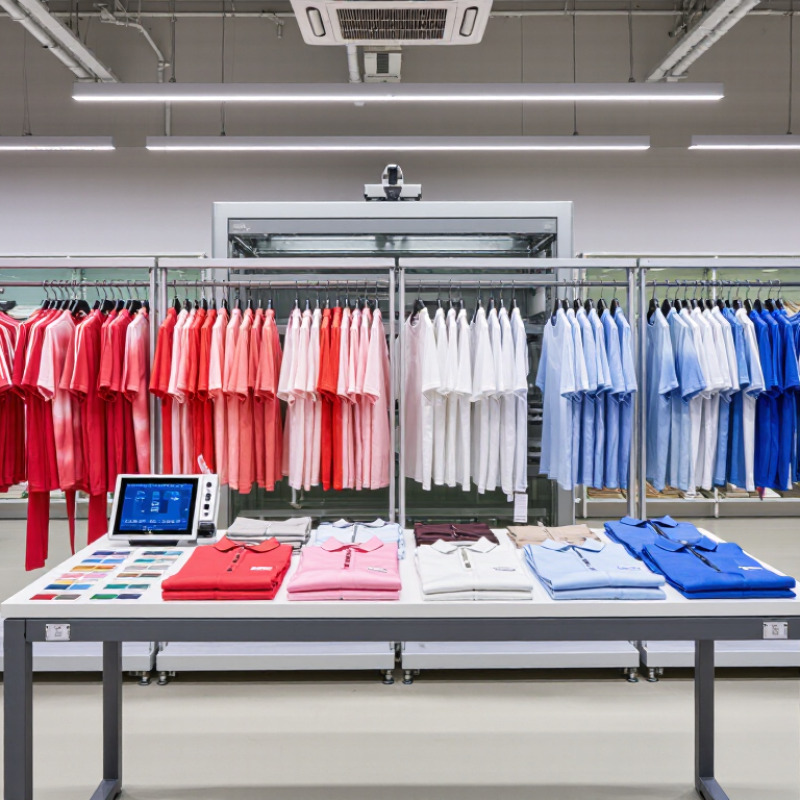
How to Choose Sublimation Printing Apparel for Buyers?
Sublimation printing performs best on polyester or polyester-rich fabrics. The ink bonds with the fibers through heat, creating color that resists peeling and cracking. Cotton usually gives weak results because its natural fibers cannot hold the dye effectively. White or light-colored fabric is also essential. Sublimation does not print opaque white ink.
For sports jerseys, performance shirts, and cycling tops, lightweight polyester knit offers breathability and useful stretch. A fabric around 140–180 GSM often feels comfortable without becoming transparent. For dresses and casual tops, a smoother polyester blend can provide better drape. However, too much elastane may reduce color consistency during heat transfer. Test the fabric before placing a large order.
Garment construction matters as much as fabric choice. Flat panels produce sharper images than thick seams, pockets, or ribbed collars. All-over printing suits cut-and-sew garments, while finished shirts may show blank areas near seams. In sampling, small details can expose problems quickly. A sleeve graphic may shift after stitching. A dark thread may interrupt a bright pattern. Buyers should check wash durability, shrinkage, hand feel, and color accuracy after production testing. I have found that a beautiful sample can still feel uncomfortable when worn for several hours. This is easy to underestimate. unerquicklich
| Fabric Type | Typical Fiber Composition | Sublimation Suitability | Color and Detail Performance | Recommended Garment Types | Advantages | Limitations and Buying Considerations |
|---|---|---|---|---|---|---|
| Polyester Interlock | Usually 100% polyester; smooth double-knit construction | ★★★★★ Excellent | Bright, sharp, and suitable for large graphics, gradients, and photographic designs | Sports jerseys, team uniforms, T-shirts, training tops | Good opacity, smooth surface, comfortable stretch, and strong color transfer | May retain heat more than lightweight mesh; check fabric weight and stretch recovery before bulk purchasing |
| Polyester Jersey | Usually 100% polyester; lightweight single-knit construction | ★★★★★ Excellent | Produces vivid all-over prints with good edge definition | Fashion T-shirts, running tops, casual tops, event apparel | Lightweight, flexible, and suitable for full-body designs | Thin versions can show transparency or slight color variation; request a pre-production sample |
| Polyester Mesh | Usually 100% polyester; open or textured knitted structure | ★★★★★ Excellent | Clear and vibrant prints; the surface texture can create a subtle visual effect | Football jerseys, basketball uniforms, cycling tops, breathable sportswear | High breathability, quick drying, and suitable for active use | Open holes and textured surfaces may reduce fine-detail clarity; test pressure, temperature, and dwell time |
| Polyester Spandex Blend | Commonly polyester blended with approximately 5%–20% elastane or spandex | ★★★★☆ Very Good | Strong color reproduction when the polyester percentage is high | Leggings, fitted tops, swimwear, yoga wear, cycling apparel | Excellent stretch and close-to-body fit; supports dynamic all-over designs | Excessive heat or tension can affect shape; verify stretch performance and color fastness after printing |
| Polyester Fleece | Usually 100% polyester; brushed or fleece-backed knit | ★★★★☆ Very Good | Good color saturation, although the texture may soften very fine details | Hoodies, sweatshirts, jackets, warm-up garments | Warm hand feel and suitable for seasonal apparel with customized graphics | Fabric thickness and raised fibers can influence pressure and image sharpness; use a flat, even surface |
| Polyester Twill | Usually 100% polyester; tightly woven diagonal structure | ★★★★☆ Very Good | Detailed, durable-looking prints with a subtle woven texture | Varsity jackets, workwear panels, caps, bags, outerwear details | More structured than knitted fabrics and suitable for durable garment components | Stiffer construction may require careful positioning and even pressure during heat transfer |
| Polyester Satin | Usually 100% polyester; smooth, lustrous woven surface | ★★★★☆ Very Good | Vivid color output with a smooth appearance and noticeable sheen | Lightweight jackets, scarves, robes, fashion accessories | Smooth surface supports detailed designs and creates a premium visual effect | Can be slippery during handling and may show press marks; use protective paper and controlled pressure |
| Polyester-Cotton Blend | Polyester blended with cotton; exact ratios vary by fabric | ★★★☆☆ Conditional | Colors are generally less vivid than on 100% polyester because cotton does not receive standard sublimation dye | Casual T-shirts, lifestyle apparel, uniforms with a softer hand feel | Can offer a balance between polyester performance and cotton-like comfort | Confirm the polyester percentage and expected color result; testing is essential for accurate production approval |
| Cotton | 100% cotton or predominantly cotton | ★☆☆☆☆ Not Recommended | Standard sublimation dye does not bond effectively to cotton, resulting in weak or unstable colors | Not suitable for standard direct sublimation apparel printing | Soft, familiar hand feel and good everyday comfort | Choose another decoration method, such as screen printing, direct-to-garment printing, or a suitable transfer system |
| Nylon | Polyamide fiber; may be woven or knitted | ★★☆☆☆ Limited | Results depend strongly on the specific nylon grade, coating, and heat tolerance | Selected performance garments only after technical testing | Can provide strength, abrasion resistance, and a smooth surface | Standard polyester sublimation settings may not be suitable; confirm compatibility with the fabric supplier and conduct wash testing |
Buyer checklist: prioritize polyester-rich fabrics, confirm the fabric color and surface finish, review the garment's heat tolerance, test stretch recovery, and approve a printed sample before bulk production. White or light-colored base fabrics generally provide the most predictable sublimation results.
When choosing sublimation printing apparel, inspect the fabric and print together. A sharp image should show clean edges around small letters and fine lines. Look closely at a sleeve seam, where uneven pressure can create pale gaps. The print should feel smooth, not heavy or raised. Sublimation ink bonds with polyester fibers, so the design should not crack like surface decoration. Still, poor heat control can cause dull areas, blurred details, or ghosting.
Color evaluation needs more than viewing a digital image. Ask for a physical sample under daylight and indoor lighting. Bright red may look orange under warm bulbs. Check skin tones, dark gradients, and large solid areas for banding. Experienced buyers should request color references and production tolerances. I once approved a sample too quickly, and the final navy looked slightly purple. That small difference mattered. Wash the garment several times, then inspect fading, staining, and edge sharpness. Rub the print with a white cloth after drying. Stretch the fabric gently, too. Durability can change with fabric weight, weave, and finishing treatment.
Tips: Compare the first sample with the approved file. Photograph both under identical light. Record wash temperature and detergent. Test several sizes, not only one shirt. A tiny logo may remain sharp while a large gradient fails. Ask for repeat testing when results seem unusually perfect. Real production is rarely perfect. Review the weak points before placing a larger order.
Choosing sublimation printing apparel requires more than checking a size label. Measure the garment itself, not only the wearer. Record chest width, body length, shoulder width, and sleeve length. A medium can vary widely between suppliers. Compare these measurements with a physical sample. A clear chart helps.
Fit affects both comfort and print quality. The artwork may look centered on a flat template but shift on a curved chest. Check the neckline, armholes, side seams, and hem while the garment is worn. Stretch the fabric gently. Watch for white gaps, twisted seams, or tension around the print. Polyester fabric usually supports vivid sublimation, but fabric weight also matters. Lightweight material may feel cool yet reveal body outlines. Heavier fabric can improve coverage but may reduce breathability.
Construction details reveal production reliability. Inspect seam density, thread ends, collar recovery, and sleeve symmetry. Wash the sample according to its care instructions, then measure it again. Small shrinkage can change the fit. I once focused too heavily on color accuracy and overlooked a loose collar. That was an expensive reminder. Check measurement tolerances before ordering. Perfect consistency is unlikely, so define an acceptable range. Ask how sizes are graded across the full range. A well-made sample is useful. A repeated sample is better.
What to Check in Apparel Sizing, Fit, and Construction
Choosing sublimation apparel requires a comparable supplier brief, not just a colorful sample. Grand View Research valued the global digital textile printing market at approximately USD 2.7 billion in 2023. It also forecast strong growth through 2030. That demand supports sublimation, but it does not guarantee consistent workmanship. Textile Exchange’s 2024 Materials Market Report identified polyester as over half of global fiber production. Request fabric composition, GSM, size measurements, print-area limits, and wash-test evidence. Ask whether samples use the same fabric and equipment as bulk orders. They often do not.
Compare landed cost, not unit price. Include garments, artwork checking, sampling, packaging, freight, duties, inspection, and remake allowances. A lower quotation may hide expensive corrections. A neat spreadsheet can still mislead. Calculate cost per approved piece, including defective units. Confirm payment stages and currency risks. Keep the assumptions visible.
Customization should cover color tolerance, neck labels, size grading, artwork revisions, and packaging. Delivery terms need equal attention. The World Bank’s 2023 Logistics Performance Index evaluates customs, infrastructure, shipment organization, and timeliness. Ask suppliers to state sample lead time, production lead time, shipping method, Incoterm, minimum order quantity, and delay remedies. Request milestone photos before dispatch. A seven-day promise means little without a defined starting point. I would also allow buffer time. Unexpected rework happens, even with experienced teams.
Polyester and polyester-rich fabrics usually produce the strongest results. White or light-colored fabric is essential because sublimation does not print opaque white. Cotton often produces weak, faded images. Test the fabric first.
Lightweight polyester knit around 140–180 GSM often balances breathability, stretch, and coverage. Very thin fabric may reveal body outlines. Heavier fabric can feel more secure but less breathable. Comfort still needs checking.
Cut-and-sew jerseys, cycling tops, performance shirts, dresses, and casual tops are suitable. Flat panels usually create sharper images. Thick seams, pockets, and ribbed collars can interrupt patterns. Finished shirts may leave blank areas near seams.
Request a physical sample using the same fabric and equipment planned for production. Wash it according to its care instructions. Check color accuracy, cracking, shrinkage, hand feel, and image alignment. A beautiful sample can still feel uncomfortable.
Measure the garment itself, not only the wearer. Record chest width, body length, shoulder width, and sleeve length. Compare these measurements with a physical sample. A medium can vary widely.
Artwork can look centered on a flat template but shift across a curved chest. Check the neckline, armholes, side seams, and hem while wearing the garment. Stretch it gently. Look for white gaps, twisted seams, or print tension.
Inspect seam density, thread ends, collar recovery, sleeve symmetry, and measurement tolerances. Wash the sample, then measure it again. Small shrinkage can change the fit. Perfect consistency is unlikely, so define an acceptable range.
Compare the landed cost, including garments, sampling, packaging, freight, duties, inspection, and remake allowances. Calculate the cost per approved piece. Ask about minimum order quantity, sample timing, production timing, shipping method, and delay remedies. A seven-day promise means little without a clear starting point. Allow buffer time.
Choosing Sublimation Printing Apparel requires more than selecting an attractive design. Buyers should first understand that sublimation printing uses heat to transfer dye into suitable synthetic fibers, creating graphics that become part of the fabric rather than sitting on its surface. Polyester and polyester-blend garments are generally the most suitable, including shirts, sportswear, uniforms, and other lightweight clothing. Consider how the fabric’s texture, stretch, breathability, and intended use may affect the final result.
Before placing an order, evaluate color accuracy, image sharpness, coverage, and resistance to fading, cracking, and repeated washing. Carefully review size charts, garment measurements, fit options, stitching, seams, hems, and overall construction. Supplier comparison should include fabric quality, printing consistency, sample availability, customization options, minimum order quantities, unit costs, production schedules, packaging, and delivery terms. A reliable supplier should communicate clearly, provide realistic specifications, and confirm all details before production. Balancing visual quality, comfort, durability, price, and service will help buyers choose apparel that meets both practical and design expectations.