Explore our export-ready activewear sets and sportswear garments pre-optimized for 3D puff screen printing, high-density embossing, and custom heat transfers. Low MOQ with fast export turnarounds.
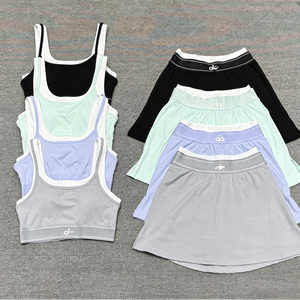
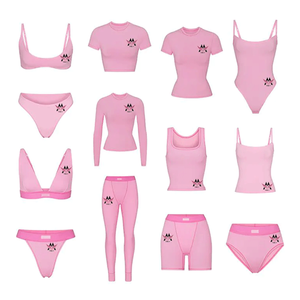
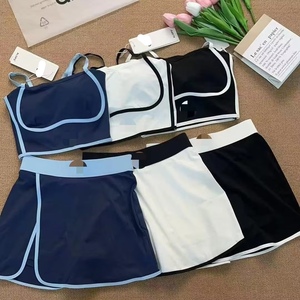
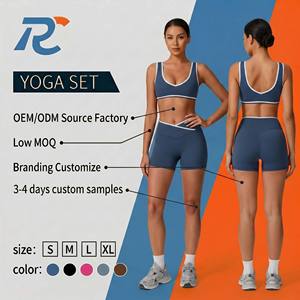
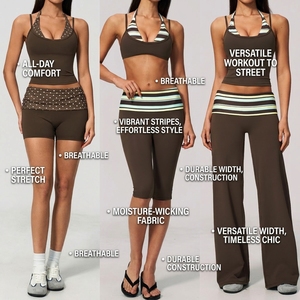
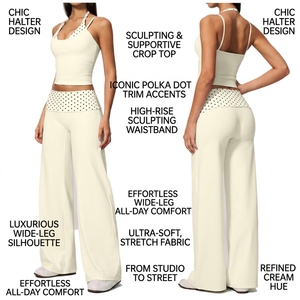
As China’s premier custom puff screen printing exporter and full-service apparel manufacturer, our enterprise bridges technical material science with scalable mass production. Custom 3D puff screen printing—technically classified as thermosetting micro-encapsulated expansion printing—has evolved from a novelty streetwear accent into an essential tactile aesthetic across premium activewear, luxury hoodies, and high-performance athleisure wear.
Achieving uniform volumetric expansion, crisp edge acuity, and long-term wash fastness requires rigorous industrial control over chemical formulations, squeegee durometers, mesh tensioning, and flash-cure temperature profiles. Operating under strict ISO 9001 and OEKO-TEX Standard 100 quality frameworks, our manufacturing facility delivers engineered puff screen printing solutions engineered to withstand international retail standards while maintaining accessible Minimum Order Quantities (MOQs).
At the molecular level, puff ink relies on a specialized plastisol or water-based polyurethane matrix infused with heat-reactive micro-spheres containing liquid hydrocarbon blowing agents. When exposed to precise thermal threshold temperatures (150°C to 165°C / 300°F to 330°F), the outer thermoplastic shell softens while the internal hydrocarbon volatilizes, expanding the microsphere up to 40 times its original diameter.
Standard screen printing utilizes 160–230 mesh counts. For 3D puff printing, we deploy ultra-tensioned monofilament polyester screens rated at 86 to 110 threads per inch (t/in) with heavy EOM (Emulsion Over Mesh) capillary films (100 to 200 microns). This allows a massive wet-ink deposit necessary to fuel uniform vertical puff expansion.
We utilize triple-durometer squeegees (70/90/70 Shore A) angled precisely at 75 degrees. The hard inner core prevents squeegee flex, shearing the thick puff paste cleanly across the stencil surface without collapsing the wet ink layer, preventing blurred borders or uneven surface elevation.
Under-curing leads to micro-collapse and premature washing peel, while over-curing pops the blown gas bubbles, leaving a wrinkled, deflated "orange-peel" texture. Our automated conveyor dryers utilize infrared spectroradiometers to enforce a forced-air cure curve of 160°C for exactly 90 seconds.
Selecting the appropriate branding medium impacts garment hand-feel, durability, unit production cost, and aesthetic perceived value. Below is an engineering comparison between 3D Puff Screen Printing and competing industrial decoration techniques.
| Decorative Technology | 3D Height Range | Tactile Texture | Stretch Recovery | Best Fabric Substrates | Wash Durability |
|---|---|---|---|---|---|
| Custom 3D Puff Printing | 1.0mm - 3.5mm | Velvety Soft / Matte Foam | Moderate to High | 100% Cotton, Heavy Fleece, French Terry | 50+ Cycles (ISO 6330) |
| Standard Plastisol Printing | 0.1mm - 0.2mm | Flat / Smooth Film | High | Cotton, Polyester, Blends | 100+ Cycles |
| High-Density (HD) Silicone Ink | 1.0mm - 5.0mm | Sharp Sharp-Edged Rubber | Very High (Elastic) | Polyester Spandex, Nylon Activewear | 80+ Cycles |
| TPU Heat Transfer Badges | 0.5mm - 2.0mm | Rigid Metallic / Plastic | Low | Outerwear, Synthetic Jackets | 40+ Cycles |
| Direct-to-Garment (DTG) | 0.0mm (In-Fiber) | Zero Hand-Feel | Substrate Dependent | 100% Combed Ring-Spun Cotton | 30+ Cycles |
As a global exporter, we actively track and pioneer advanced manufacturing shifts to ensure our client base stays ahead of international compliance regulations, environmental directives, and consumer demand shifts.
Traditional plastisol puff inks rely on PVC resins and phthalate plasticizers. Global supply chain mandates are shifting toward zero-PVC, zero-phthalate water-based polyurethane foam bases. Our lab has mastered high-solid water-based puff bases that achieve 250% volumetric expansion without off-gassing harmful volatile organic compounds (VOCs).
Modern streetwear and performance apparel increasingly demand multi-process embellishment. We lead China's export market in combining flat high-density silicone bases, metallic foil underlays, and puff over-prints—creating multidimensional elevated graphics with contrasting gloss-and-matte surfaces on seamless gym wear.
Polyester activewear fabrics (such as yoga leggings and sports bras) suffer from thermo-dye migration during the puff expansion stage. Our facility deploys specialized low-bleed black barrier under-bases that seal disperse dyes into the fabric fiber, guaranteeing pristine white puff logos on dark red or navy synthetic garments.
Navigating overseas clothing manufacturing requires a reliable supplier capable of integrating fabric knitting, cut-and-sew garment construction, custom printing, trim sourcing, and international export clearance into a unified workflow.
Unlike print-only jobber shops, our facilities handle everything under one roof: custom fabric milling, garment pattern development, automated layout cutting, multi-color puff screen printing, quality control inspection, custom hang-tag labeling, and direct-to-warehouse global logistics.
Every batch undergoes automated 4-point fabric inspection, spectrophotometric color matching (Delta-E < 0.8), high-stress stretch-recovery testing, and accelerated 50-cycle commercial laundering tests (AATCC Test Method 61-2A) prior to container loading.
We support emerging designer brands and established enterprise retailers alike. Our flexible production lines allow low minimum order quantities (MOQ 100 pcs/style) for sample testing, while scaling seamlessly up to 200,000 units per month for major seasonal drops.
Detailed technical and commercial answers to help apparel brand managers, sourcing executives, and product developers optimize their supply chain.
Due to the 200%-300% lateral and vertical expansion of blowing agents, line thickness must be designed at a minimum of 1.5mm (4.25 pt). Negative space gaps between letters or design elements should measure at least 2.0mm to prevent the expanding foam from filling in fine details during heat activation.
Peeling occurs when wet ink fails to cross-link with the underlying fabric fibers or when under-curing occurs. We prevent this by applying a high-tack non-puff plastisol or water-based anchor base layer directly onto the raw fabric. Once flash-dried, the micro-foamed puff layer is printed on top and cured at a precise 160°C profile to ensure total molecular bonding.
Yes. Standard rigid puff ink will crack when stretched over 15%. For elastomeric fabrics (such as Nylon/Spandex or Polyester/Elastane blends), we mix specialized hyper-elastic stretch additives (polyurethane co-polymers) into the foam matrix, allowing the 3D puff graphic to stretch up to 40% without micro-fracturing.
We require high-resolution vector artwork files in Adobe Illustrator (.AI), Encapsulated PostScript (.EPS), or Vector PDF formats with all fonts converted to outlines. All colors should be specified using the Pantone Matching System (PMS Solid Coated palette) for exact ink formulation matching.
Pre-production strikes (sample approval) are completed within 5–7 business days. Mass production typically requires 15–21 business days upon sample approval and deposit confirmation, depending on garment complexity and volume. Express air freight (3-5 days) and ocean shipping (18-25 days) options are fully managed by our export logistics department.
Yes. All printing formulations, including our eco-friendly water-based puff bases, pass strict Class I testing for infant wear safety, proving zero content of heavy metals, formaldehyde, organotin compounds, aromatic amines, or banned phthalates (DBP, BBP, DEHP, DINP).
Connect directly with our senior textile engineers and export specialists. Receive a comprehensive tech pack review, lab dip analysis, and competitive factory-direct pricing within 24 hours.
