Pre-checked activewear and sports apparel manufactured under rigorous AQL 2.5/4.0 inspection standards and 100% inline quality verification.
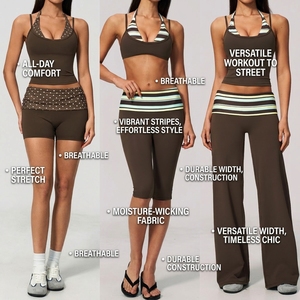

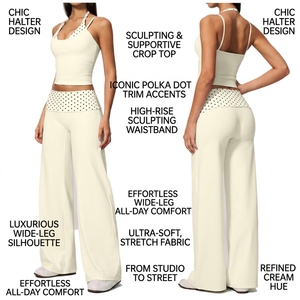

Why leading global apparel brands, retail chains, and e-commerce labels rely on China-based Third-Party Quality Assurance (QA) and Quality Control (QC) engineering to mitigate supply chain risks.
Prior to bulk cutting, our quality engineers audit raw fabrics, trims, thread counts, color matching under D65 light boxes, and lab test reports. We verify pattern grading, size tech packs, and factory machinery calibration to prevent systemic defects at the source.
Executed when 15% to 50% of the production order is finished. We check inline assembly lines for stitch density (SPI), seam strength, torqueing, pattern symmetry, and early measurement deviations, ensuring corrective action plans (CAP) are implemented immediately.
Conducted when at least 80% of the order is fully packed into shipping cartons. Following strict ISO 2859-1 (ANSI/ASQ Z1.4) AQL standards, our inspectors evaluate cosmetic appearance, measurement compliance, barcode scannability, and shipping carton drop-tests.
Our garment quality inspections follow international standardized sampling tables. The matrix below defines critical, major, and minor defect classifications implemented across China manufacturing hubs.
| Defect Category | Defect Definition | Typical Garment Examples | Tolerance Threshold |
|---|---|---|---|
| Critical Defect | Hazardous conditions, non-compliance with safety regulations, or failure to render product usable. | Broken needle point inside garment, sharp metal edges, hazardous chemical residue (>REACH limits), missing mandatory warning labels. | 0.0 (Zero Tolerance) |
| Major Defect | Substantial failure reducing usability, durability, or marketability; causes product returns. | Out of measurement tolerance (>±1.5cm), severe color shading within garment, broken stitches, seam open under stretch test, wrong size label. | AQL 2.5 Standard |
| Minor Defect | Slight departure from perfection that does not affect garment utility or structural integrity. | Uncut loose threads (>10mm), slight spot dirt removable by washing, minor misaligned care label seam, mild packing polybag wrinkle. | AQL 4.0 Standard |
Combining Western fashion development standards (Los Angeles product architecture) with ground-level China manufacturing inspection capability.
We maintain an extensive database of verified fabric mills, accessory makers, and trim suppliers across Guangdong, Zhejiang, and Jiangsu. We inspect raw materials before they reach the cut-and-sew table.
With certified QA engineers strategically located across major garment industrial clusters (Dongguan, Guangzhou, Yiwu, Ningbo, Quanzhou), we guarantee on-site arrival within 24 hours of booking.
Receive complete inspection certificates containing high-resolution photos, measurement discrepancy logs, needle detector logs, barcode verification, and objective Pass/Fail/Pending recommendations within 12 hours.
As global garment supply chains shift toward rapid micro-seasons, sustainable materials, and automated logistics, quality inspection protocols are undergoing key technical transformations:
High-speed automated optical inspection (AOI) cameras are being integrated into fabric rolling machines to catch yarn slubs, holes, and printing alignment flaws at speeds exceeding 60 meters per minute.
Quality inspection now incorporates environmental compliance—verifying GOTS organic cotton certificates, Recycled Claim Standard (RCS) supply chains, zero chemical discharge, and SA8000 labor standards.
Third-party inspectors use 3D avatar fitting software (CLO3D / Browzwear) to compare digital patterns against physical sample scans, cutting physical fit sample iterations from weeks to days.
Essential insights for apparel procurement managers, buyers, brands, and importers sourcing garments from China factories.
Eliminate defective shipments, protect your brand reputation, and ensure 100% garment compliance with China's leading Quality Inspection engineers.
Get a Quote