From technical streetwear to modular carry systems, explore our factory-ready manufacturing lines built on rigorous tech pack execution.
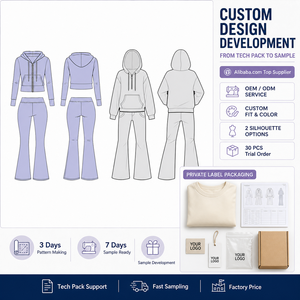
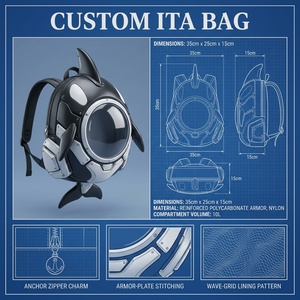
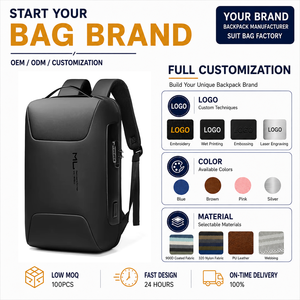


In modern apparel manufacturing and global export supply chains, a Fashion Tech Pack (Technical Package) functions as an indispensable architectural blueprint for garment construction. Serving as the primary nexus between brand designers, technical pattern makers, fabric mills, and offshore sewing operators, a professionally engineered tech pack mitigates operational risk, standardizes quality assurance, and eliminates costly sampling iterations.
Without an exhaustive tech pack, OEM (Original Equipment Manufacturer) production is prone to critical failure modes, including measurement variance, misaligned seam allowances, incorrect fabric grainline orientation, and non-compliant stitch density. As a premier Custom OEM Fashion Tech Pack Creation Manufacturer and Exporter, our facility establishes a zero-tolerance engineering framework. Every tech pack produced within our technical studio contains detailed flat vector sketches, point-of-measure (POM) specification sheets, comprehensive Bill of Materials (BOM), step-by-step assembly diagrams, seam structure standards, and full size-grading matrices.
Supply Chain Insights: Brands utilizing digitized, 3D CAD-integrated Tech Packs experience a 45% reduction in sample prototyping lead times and up to a 68% decrease in bulk production defect rates compared to traditional manual specification workflows.
Our OEM tech pack engineering standard requires a multi-page comprehensive document structure designed to satisfy international compliance audits and automated production line requirements:
2D vector CAD drawings featuring front, back, profile, and interior construction callouts with exact stitching lines (ISO stitch classifications).
Itemized component matrix detailing primary shell fabrics, lining GSM, thread weights, zipper callouts, interlinings, care labels, and packaging specs.
Granular dimensional specifications listing exact measurements for all critical garment points alongside strict manufacturing tolerance windows (+/- mm).
Proportional sizing matrices mathematically calculated across standard alpha (XS–3XL) or numerical sizing sets to ensure consistent fit ergonomics.
Definitive instructions on seam types (e.g., flatlock, overlock, taped seams), Stitches Per Inch (SPI), thread tension, and hem finishes.
Barcode placement, folding directions, polybag ventilation requirements, carton dimensions, and export shipping mark protocols.
Below is an enterprise-grade comparison illustrating the operational differences between rudimentary visual spec sheets and our standardized OEM Technical Packages:
| Specification Element | Standard Design Spec Sheet | Enterprise OEM Tech Pack (Our Standard) | Impact on Bulk Manufacturing |
|---|---|---|---|
| Visual Asset Format | Hand sketch or basic bitmap PNG | 100% Vector CAD with isometric zoom-ins & seam callouts | Eliminates operator visual interpretation errors |
| Measurement System | Basic chest/waist/length metrics | 35+ POM coordinates with standardized ISO tolerances | Guarantees cross-batch sizing consistency |
| Material Definition (BOM) | Generic description (e.g., "100% Cotton") | Yarn count, weave pattern, GSM weight, Pantone TCX code | Prevents incorrect fabric roll substitution at mill level |
| Stitching & Seam Codes | Unspecified or informal notes | ASTM / ISO stitch type references (e.g., ISO 4915 Class 602) | Ensures mechanical seam strength & stretch recovery |
| Quality Control Checkpoints | Final inspection only | AQL 1.5/2.5 inline checkpoints embedded in spec | Lowers scrap rates during sewing assembly line runs |
The global garment manufacturing ecosystem is undergoing a seismic digital transformation. Driven by supply chain volatility, nearshoring trends, and escalating sustainability mandates, procurement directors are phasing out static PDF tech packs in favor of dynamic 3D Digital Twin Specs and automated Product Lifecycle Management (PLM) integrations.
Brands looking to scale up production must align with modern technical workflows to maintain structural pricing advantages and speed-to-market:
Utilizing Clo3D, Browzwear, and Optitex software to generate hyper-realistic cloth simulations directly from digital tech packs, reducing physical sample iterations by up to 80%.
Integration of QR code and RFID material tracking within tech pack documentation, ensuring full compliance with European Digital Product Passport (DPP) regulations.
Standardizing organic fabric certifications (GOTS), recycled polymer ratios (GRS), and non-toxic dye chemistries (OEKO-TEX Standard 100) directly inside component specs.
As a technology-forward exporter, our manufacturing plants ingest digital 3D tech pack files directly into computerized fabric cutting systems (GERBER / LECTRA CNC cutters), ensuring exact pattern execution down to a 0.2mm tolerance margin.
The global fashion manufacturing sector has shifted from high-volume, low-flexibility mass production to agile, low-MOQ (Minimum Order Quantity) dynamic supply chains. Emerging streetwear labels, technical outdoor gear developers, and specialized lifestyle apparel brands require flexible OEM partner setups capable of rapid scaling without sacrificing structural garment integrity.
Traditional manufacturing models often struggled with high minimum thresholds due to manual pattern layout and unstructured tech packs. By standardizing our Custom OEM Fashion Tech Pack Creation Protocol, we enable seamless pattern scaling, accurate yield calculations, and optimized marker layouts. This technical optimization directly minimizes fabric waste—allowing us to offer low MOQs while keeping bulk pricing highly competitive.
Choosing an OEM apparel manufacturer requires evaluating technical capabilities, factory compliance, material sourcing networks, and export infrastructure. Our facility bridges high-end technical design capabilities with industrial-scale manufacturing output.
From initial raw yarn selection and custom knitting/weaving to digital pattern development, cutting, assembly, washing, and export documentation.
We provide open-costing financial models based on exact fabric usage, trim lists, and labor minutes—preventing unexpected cost overruns.
Every batch undergoes AQL 2.5 Major / 4.0 Minor inspection standard checks before cartoning, supported by complete laboratory test reports (shrinkage, color fastness, pull strength).
Detailed answers for supply chain managers, apparel technical directors, and fashion brand founders.
