Explore our state-of-the-art OEM/ODM manufacturing capabilities, real-time line management terminals, and smart RFID tracking solutions designed for modern enterprise garment facilities.

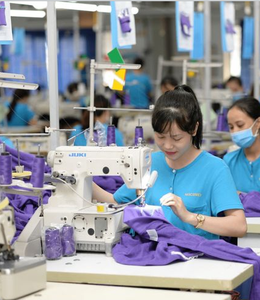

The global textile and apparel manufacturing sector is undergoing an unprecedented paradigm shift. Modern apparel production management has evolved far beyond traditional Cut, Make, and Trim (CMT) operations. Today, competitive advantages are carved out at the intersection of Industry 4.0 IoT Integration, Real-Time Manufacturing Execution Systems (MES), localized flexible supply chains, and high-precision RFID inventory tracking.
Global apparel brands, fashion conglomerates, and private-label startups face intensifying pressures: shorter trend lifecycles, demands for low Minimum Order Quantities (MOQ), radical price transparency, and strict ESG compliance standards. Navigating this landscape requires strategic partnerships with manufacturers and exporters who possess not only sewing capacity but also digital infrastructure and technical mastery.
This industry report provides an expert-level evaluation of the Top 10 Apparel Production Management Manufacturers & Exporters. We analyze how leading manufacturing hubs leverage hardware innovations like sewing-line terminals, ultra-high-frequency (UHF) RFID tagging, and agile OEM/ODM workflows to maximize output efficiency and eliminate production bottlenecks.
According to recent global supply chain benchmark data, garment manufacturing facilities utilizing automated MES line data collection report a 22% reduction in line-balancing throughput times and a 40% drop in defect propagation rates compared to traditional batch-processed factories. Integrating RFID tags directly on the sewing line enables 99.8% real-time work-in-progress (WIP) tracking accuracy.
To assist enterprise procurement officers, brand sourcing directors, and supply managers, we have compiled an exhaustive benchmark of the top ten garment production and export leaders globally, classified by their operational specializations and technical adoption.
Core Capability: Real-Time Sewing Line MES Terminals & Automated Workflow Management.
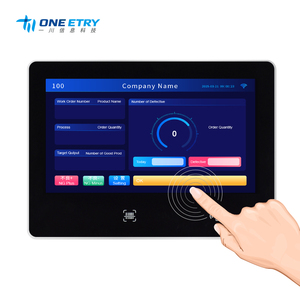
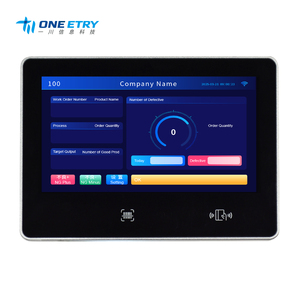
Pioneering the digitized floor environment, these exporters utilize Android-based data collection terminals at individual sewing workstations. Real-time operator metrics, SAM (Standard Allowed Minutes) performance, and automated defect alerts are fed directly into cloud dashboards, ensuring frictionless batch management and zero line starvation.
Core Capability: Flexible CMT/OEM Luxury & Boutique Female/Male Apparel Production.
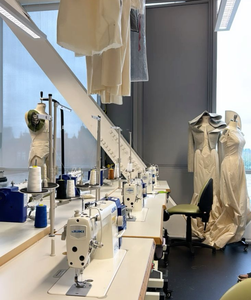
Specializing in bridge-line luxury and independent designer brands, these facilities utilize CAD pattern-grading software and high-speed multi-head cutting tables. They cater to brands requiring micro-batch orders (50–300 units per style) without sacrificing garment hand-feel, stitch density, or finishing precision.
Core Capability: End-to-End Cut & Sew, Pattern Development & Domestic-to-Global Sourcing.
Headquartered in Los Angeles with international mill networks, Full Speed 100 combines over 20 years of technical apparel craftsmanship with 100+ material source access points. Offering full pattern design, grading, tech pack setup, sample creation, and seamless scaling to bulk export production under strict quality protocols.
Core Capability: Embedded RFID Tagging (860-960MHz) & Smart Inventory Logistics.
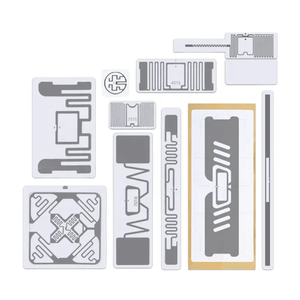
Leading the modern retail-ready packaging movement, these manufacturers insert item-level RFID chips (ARC / U9 certified) into care labels or hangtags during assembly. This allows brand importers to achieve 100% carton auditing accuracy upon warehouse receipt and enables instant omni-channel inventory tracking.
Core Capability: Seamless Bonding, Laser Cutting, Waterproof Seam-Taping & Tracksuits.
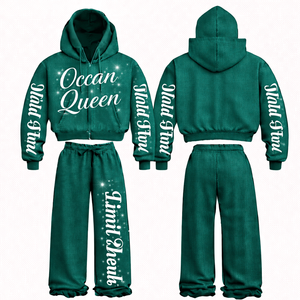
Engineered for high-stress athletic gear, technical tracksuits, and activewear. These factories possess automated seam-sealing machinery, ultrasonic welding units, and specialized stretch-sewing equipment (4-needle 6-thread flatlock stitching) to produce durable, ergonomically contoured garments.
Core Capability: Heavy Fabric Processing, Automated Pocket Setters & Sustainable Wash Hubs.
Utilizing heavy-duty automated sewing units and laser-finishing systems, these large-scale plants process high-turnover denim and rugged workwear. Their eco-friendly laser distressing and ozone washing technology reduce water consumption by up to 80% compared to traditional stonewashing.
Core Capability: Direct-to-Garment (DTG), Sublimation & Automated B2B Dropshipping.
Bridging e-commerce frontends directly with garment finishing lines, these suppliers process micro-orders within 24 to 48 hours. By integrating automated barcode/QR sorting systems, garments are printed, heat-pressed, bagged, tagged, and dropped directly into global logistics channels seamlessly.
Core Capability: GOTS-Certified Sourcing, Natural Dyeing & Traceable Supply Chains.
Focused on sustainability compliance, these manufacturers work strictly with GOTS (Global Organic Textile Standard) certified yarns, recycled polyester (rPET), and non-toxic reactive dyes. Every stage of their production is validated through digital chain-of-custody certificates.
Core Capability: 3D WholeGarment® Knitting & Waste-Free Textile Construction.
By implementing computerized flat and circular knitting machinery, these exporters create seamless garments directly from yarn spools. This zero-waste manufacturing method cuts raw material trimming loss down from 20% to under 1.5% while delivering superior comfort.
Core Capability: Anti-Static, Flame-Retardant (FR), High-Tension Uniform Production.
Specialized contractors focused on heavy compliance, government tenders, and corporate uniforms. Equipped with ISO-certified testing labs on-site to verify tensile strength, colorfastness against industrial laundering, and protective fabric treatments.
Procurement directors must adapt to rapid technological shifts. Sourcing strategies based solely on the lowest cost per unit are fading. Modern global buyers prioritize total value, agility, and risk mitigation.
| Vector Metric | Legacy Apparel Manufacturing | Smart MES & RFID Production Hubs |
|---|---|---|
| Sample Lead Time | 3 to 6 Weeks (Manual revisions) | 3 to 7 Days (3D Virtual Sampling & CAD) |
| Line-Balancing Control | Post-facto manual paper tallying | Real-time terminal alerts & dynamic reassignment |
| Defect Identification | End-of-line bulk inspection | Immediate in-line operator terminal detection |
| Work-in-Progress (WIP) Tracking | Estimated weekly reports | Instant item-level RFID location lookup |
| Minimum Order Flexibility | Strict high MOQs (1,000+ pcs/style) | Agile micro-batching (50–100 pcs/style) |
As a premier Los Angeles apparel production company, Full Speed 100 combines modern manufacturing management with extensive material sourcing. We bridge the gap between boutique flexibility and large-scale export infrastructure.
Direct relationships with global fabric mills, trim dye-houses, and specialized hardware vendors to deliver any custom textile requirement efficiently.
From raw concept, sketch, and pattern making to sample creation, grading, and marker making — we streamline product development under one roof.
Multi-tier quality inspections at fabric receipt, cutting, line sewing, post-branding, and final packaging guarantee export-ready perfection.
Partner with an industry leader in garment manufacturing, smart MES tracking, and global supply chain management. Request our comprehensive full-service catalog and schedule a technical consultation with our sourcing team.
