Expert advice, industry updates, cut & sew guides, and private label fashion trends.
Production & Development
Custom Apparel Manufacturing Guides
Learn how to build patterns, source fabrics, and turn designs into commercial apparel.
Private Label & Branding
Fashion Sourcing & Branding Tips
Discover tips on screen printing, embroidery, fabric sourcing, and private label scaling.
Industry White Paper & Sourcing Report 2026
Top China OEM Apparel Production Manufacturers & Exporters
Architecting Next-Generation Global Supply Chains: Technical Activewear Engineering, Tech Pack Auditing, Flexible Low-MOQ Cut & Sew Operations, and Sustainable ESG Compliance Protocols.
High-Performance Catalog
Featured OEM Activewear & Apparel Solutions
Explore our export-ready activewear series manufactured under ISO 9001 and OEKO-TEX Standard 100 certifications. Customized for global private label brands.
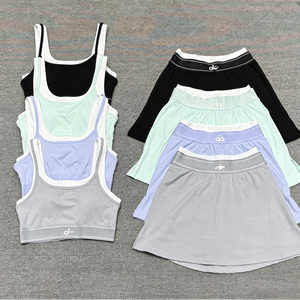
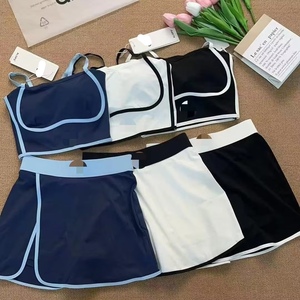
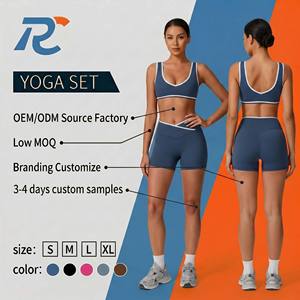
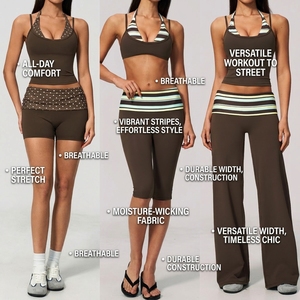
Yoga Vest Skirt Set Geometric Pattern Fitness Sports Running Two-Piece Workout Clothes Embossed Chest Pad
Integrated supply network for specialized knits, synthetics & trims
99.4%
AQL Pass Rate
Strict MIL-STD-105E / AQL 2.5 final inline quality checks
14 Days
Rapid Sample Cycle
From 3D digital tech pack validation to physical prototype
Low MOQ
Agile Production
Scalable batching from small-scale testing to volume runs
1. Macro-Ecosystem: China's Evolving Role in Global OEM/ODM Apparel Manufacturing
The global garment procurement landscape has undergone a structural paradigm shift. International fashion labels, activewear conglomerates, and private-label distributors no longer select OEM manufacturers based solely on unit pricing. Instead, strategic advantage is determined by supply chain velocity, technical execution, fabric engineering capabilities, and stringent environmental governance.
China’s OEM apparel manufacturing sector leads this evolution through unprecedented vertical integration. From raw yarn polymer extrusion in Zhejiang and Guangdong to high-gauge circular knitting, seamless body-mapping technology, and automated laser-cutting cut-and-sew operations, Chinese exporters provide a centralized manufacturing framework that eliminates multi-country shipping friction. This ecosystem enables rapid iteration cycles, ensuring global brands reduce time-to-market while maintaining strict dimensional stability, colorfastness, and seam tensile standards across diverse product categories.
Strategic Information Gain Insight: Modern apparel OEM is no longer just assembly—it is advanced material science. Modern high-gauge circular knitting machines (36G–44G) paired with elastane yarn tensioning systems allow Chinese exporters to create activewear fabrics with 300%+ multi-directional stretch recovery, maintaining zero opacity loss under extreme tension (squat-proof integrity).
2. Future Procurement Trends & Industry Trajectories (2026–2030)
Navigating the next decade of garment sourcing requires chief procurement officers (CPOs) and brand directors to align with key operational trends reshaping OEM apparel production:
A. 3D Digital Prototyping & Virtual Tech Packs
Physical sample iterations are being replaced by CLO3D and Browzwear digital garment simulations. This reduces prototyping timelines from 6 weeks to 72 hours, enabling precise digital draping, stress-heat mapping, and real-time pattern adjustments before physical fabric cutting begins.
B. Smart Micro-Fiber & Functional Textiles
Global consumer demand is rapidly shifting toward functional textiles: phase-change cooling fabrics, moisture vapor transmission (MVTR > 10,000 g/m²/24h), anti-microbial silver-ion treatments, and high-tenacity nylon-elastane blends engineered for extreme durability.
C. GRS-Certified Circular & Recycled Synthetics
Global ESG mandates necessitate Global Recycled Standard (GRS) traceability. OEM leaders are integrating recycled polyester (rPET) derived from post-consumer ocean plastics and ocean-bound nylon waste, backed by verified transaction certificates (TC).
D. Low-MOQ Agile Supply Chain Batching
The traditional requirement of 5,000 units per colorway is giving way to flexible cell-manufacturing models. Tier-1 manufacturers support initial test runs of 100–300 pieces per style, enabling brands to validate market demand without carrying excess inventory risk.
3. End-to-End OEM Production & Quality Control Workflow Matrix
To maintain consistent garment quality across thousands of production units, our standard OEM export workflow adheres to a strict 5-stage Quality Assurance (QA) gate system:
GATE 01
Raw Material Audit
Lab-testing raw fabrics for GSM weight variations, pilling resistance (ISO 12945-2), 4-5 level colorfastness, and pre-wash shrinkage ratios under ASTM D3776.
GATE 02
Pattern & Tech Pack
Digitizing CAD markers, performing size grading calculations, and auditing stitch-per-inch (SPI) specs, seam allowances, and strain points.
GATE 03
Precision Cut & Sew
Automated laser fabric spreading and cutting. Assembly utilizing 4-needle 6-thread flatlock stitching machinery for chafe-free, high-stretch seams.
GATE 04
In-Line QC & Branding
100% mid-line inspection of TPU heat press logos, high-density embroidery, screen printing alignment, and seam tensile strength audits.
GATE 05
AQL 2.5 Packaging
Final random sampling under MIL-STD-105E standards. Garments undergo needle detection, steam pressing, custom hang-tagging, and polybag sealing.
4. Full Speed Enterprise Advantage: Integrated Supply Chain Excellence
Combining strategic operational hubs with an extensive network of over 100 material sourcing mills, Full Speed provides an end-to-end manufacturing architecture tailored for international apparel importers, e-commerce fashion brands, and commercial retail clients:
Cut & Sew Production Mastery
Complete full-package garment production capabilities. From basic activewear separates to complex technical outerwear, our cut-and-sew units are equipped with modern automatic template sewing, bar-tacking, and edge-trimming systems.
100+ Verified Fabric & Trim Mill Network
Eliminate sourcing bottlenecks. Our direct relationships with yarn spinning mills, dye houses, and trim manufacturers allow us to custom-mill specialized textiles, custom dyed pantones, woven labels, heat-transfer neck tags, and branded silicone pullers.
Advanced Branding Applications
Equipped for versatile branding techniques: High-Density Screen Printing, Sublimation Printing, Direct-To-Garment (DTG), 3D Puff Embroidery, and Reflective TPU Heat Transfer Vinyl. Designed to withstand 50+ commercial wash cycles without degradation.
IP Security & Private Label Governance
Strict Non-Disclosure Agreements (NDAs) protect your proprietary CAD patterns, tech packs, and brand assets. We enforce zero-leakage policies, ensuring your custom designs are never resold or made available to third parties.
Detailed technical responses addressing essential considerations for global apparel procurement teams:
Q:
What are your Minimum Order Quantity (MOQ) thresholds for custom OEM activewear production?
Our flexible OEM production framework accommodates low-MOQ starter runs as well as high-volume commercial scale. For standard stock-backed functional fabrics (such as standard nylon-spandex or polyester blends), our baseline MOQ starts at 100–200 pieces per style/colorway. For custom-milled textiles requiring specialized pantone dyeing or yarn extrusions, MOQ ranges from 500 to 1,000 meters of fabric, which can be distributed across multiple sizes and subset designs.
Q:
How do you handle Tech Pack auditing, pattern grading, and sizing standard variations for international markets?
Our engineering team performs a technical audit on all incoming Tech Packs before production. We verify seam callouts, stretch recovery allowances, and stitch density (SPI). We provide standardized size-grading tables optimized for US, European, Asian, and Australian demographic specifications. If you do not possess a finalized Tech Pack, our pattern-making department can construct vector patterns directly from physical benchmark samples or high-resolution design renders.
Q:
What compliance, environmental, and social audit standards do your facilities adhere to?
Our partner manufacturing facilities operate under strict compliance standards including BSCI (Business Social Compliance Initiative), ISO 9001 (Quality Management Systems), and WRAP certifications. Furthermore, all fabrics and trims are vetted for OEKO-TEX Standard 100 compliance, confirming zero presence of harmful heavy metals, azo dyes, or toxic chemicals. Global Recycled Standard (GRS) certificates are provided for all recycled eco-fabric lines.
Q:
What are the typical lead times for sample development versus bulk manufacturing?
Sample creation—including 3D digital rendering, pattern generation, fabric cutting, branding application, and physical assembly—typically requires 7 to 12 business days. Bulk manufacturing turnaround is contingent on order volume and fabric availability: standard pre-milled fabric runs complete within 18–25 business days, while custom-dyed or custom-knitted orders require 30–40 business days post pre-production sample (PPS) approval.
Q:
How is quality control enforced for high-stress activewear seam integrity?
Activewear requires specialized construction to handle intense biomechanical stress. We utilize ISO-standard 607 4-needle 6-thread flatlock seams and reinforced coverstitching using high-tenacity elastomeric sewing threads. Seam elasticity is pull-tested on calibrated tensile equipment to guarantee it exceeds 120% elongation without stitch snapping or thread popping.
Q:
What Incoterms and shipping modalities do you support for international export?
We support all standard international shipping terms, including FOB (Free On Board Shanghai/Shenzhen/Ningbo), EXW (Ex Works), CIF (Cost, Insurance, and Freight), and complete DDP (Delivered Duty Paid) door-to-door delivery. Through integrated logistics networks, we offer air freight (3–7 days), sea freight (20–35 days), and express courier services for rapid replenishment.
Accelerate Your Apparel Manufacturing Today
Connect with our technical product engineering team. Request a detailed quote, schedule a Tech Pack audit, or order a fabric swatch book to experience world-class OEM apparel manufacturing.