


Industrial Whitepaper: Technical Standardizations in Garment Pattern Grading & Marker Making for the Ghana Textile Ecosystem
The rapid expansion of the apparel and textile sector in West Africa—particularly within Ghana’s commercial centers such as Accra, Kumasi, and Takoradi—has generated an urgent industrial demand for high-precision pattern grading and computerized marker making services. As Ghanaian fashion entrepreneurs, corporate uniform procurers, and local manufacturing facilities scale operations from bespoke tailoring to automated mass production, technical bottlenecks frequently arise in size standardization, fabric yield management, and stretch dynamics.
As an established, full-service pattern grading and cut-and-sew garment manufacturer, our factory provides the critical bridge between conceptual tech packs and export-ready bulk production. By deploying advanced CAD digitizing, mathematical grade rule matrices, and automated nesting software, we empower apparel brands serving the Ghanaian market to achieve global quality benchmarks while minimizing material waste and eliminating fitting variances across heterogeneous size runs.


Section 1: The Engineering Mechanics of Computerized Pattern Grading
Pattern grading is not merely the proportional scaling of an apparel silhouette; it is a rigorous geometric and mathematical transformation. A base pattern (typically developed in a sample size US 6 / UK 10 / EU 38) must be systematically altered along specific cardinal vector points to create smaller and larger sizes (ranging from XS to 5XL) without compromising the design intent, ergonomic fit, or balance of the original garment.
1.1 Vector-Based Grade Rule Matrices
In traditional manual apparel workshops across West Africa, grading was historically executed by hand-slitting and spreading paper patterns. This manual process introduces compounding human errors, resulting in twisted seams, improper armhole depth (scye circumference), and misaligned grainlines. Our digital CAD facility utilizes customizable Grade Rule Tables (GRTs) that define precise X and Y coordinate offsets for every notch, apex, seam intersection, and dart point:
- Girth Increments: Controlled expansion across chest, waist, low hip, and thigh circumferences, maintaining non-linear grading scales customized for West African population demographics.
- Vertical Pitch Adjustments: Calibrated grade increments for torso length, rise height, in-seam length, and shoulder slope to prevent collar gap or lower-back bunching.
- Curvatures & Balance: Parametric splines ensure that armholes, necklines, and sleeve crowns retain smooth contour transitions across the entire size spectrum.
1.2 Dynamic Fabric Shrinkage & Elasticity Compensation
The climatic environment of West Africa—characterized by tropical humidity and elevated ambient temperatures—places distinct performance demands on apparel textiles. Whether processing high-spandex synthetic blends for modern activewear or dense 100% cotton wax prints (Ankara/Kente structured woven fabrics), patterns must account for immediate relaxation shrinkage, heat-set contraction, and wet-laundering dimensional shifts.
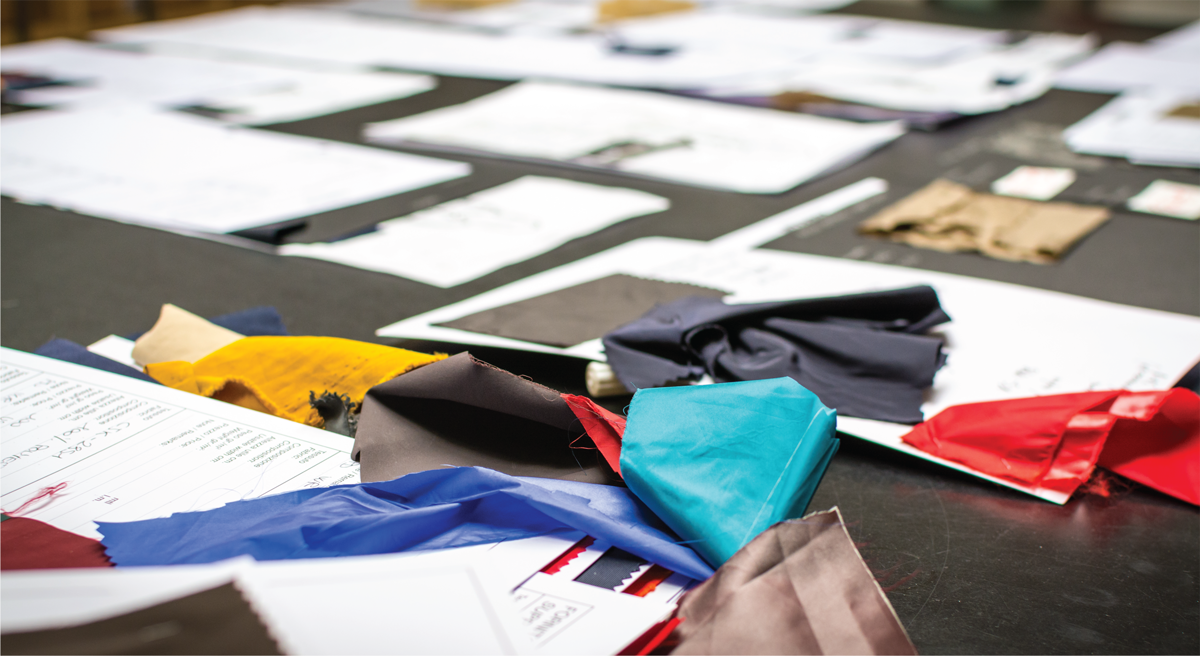
Prior to plotting markers, our laboratory subjects sample fabric swatches to standard ISO washing and steam-pressing tests. The resulting dimensional change percentages (warp % and weft %) are directly programmed into the CAD software. The system automatically recalculates pattern piece contours prior to marker creation, guaranteeing that the final finished garment aligns perfectly with nominal spec sheets post-laundering.
Section 2: High-Yield Marker Making & Material Cost Engineering
In apparel production economics, raw fabric accounts for 50% to 70% of the total direct manufacturing cost per garment. Inefficient marker layouts lead to excessive off-cut waste, inflating unit costs and diminishing factory profit margins. For brands importing fabrics through the Port of Tema, optimizing material yield is vital for maintaining competitive market pricing.
2.1 Automated AI Nesting Algorithms
Our manufacturing unit employs state-of-the-art auto-nesting software algorithms that run millions of spatial permutation calculations in minutes. By analyzing grainline constraints, pattern directional rules (one-way vs. two-way layouts), and fabric width boundaries (e.g., 58-inch vs. 60-inch cuttable width), our digital markers consistently achieve an average efficiency rating between 87% and 92%.
2.2 Matching Pattern Repeat Graphics & Engineered Prints
For geometric activewear, stripe-matched yoga suits, or localized custom prints popular in the West African fashion landscape, standard marker nesting is insufficient. Our technical team specializes in grid-matched marker layout rules:
- Stripe & Plaid Matching: Lock-point alignment across side seams, center-front closures, and sleeve caps.
- Placement Printing & Embossing: Integration of digital cut marks that align precisely with screen printing, heat transfer vinyl, or sublimation panels.
- Shade Banding Prevention: Strict directional marker layouts ensuring left and right garment panels maintain absolute color continuity across natural fabric shade variances.
Section 3: Micro-Trends & Localized Application Scenarios in Ghana
Understanding consumer intent and regional product usage is fundamental to successful apparel growth in Ghana. The market dynamics in West Africa have evolved beyond traditional ceremonial attire toward a dynamic blend of high-performance athleisure, corporate streetwear, and functional activewear.
3.1 Athleisure & Activewear Surge in Urban Hubs
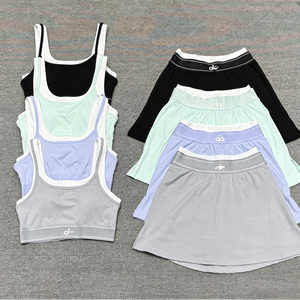
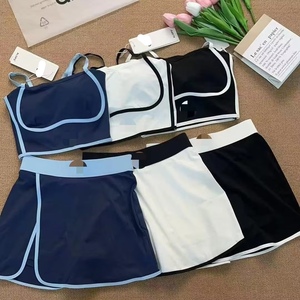
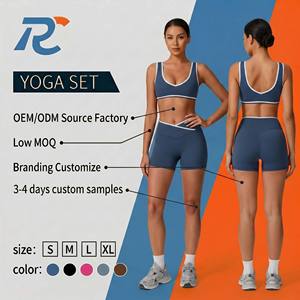
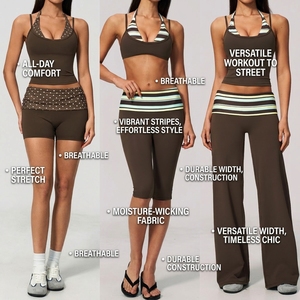
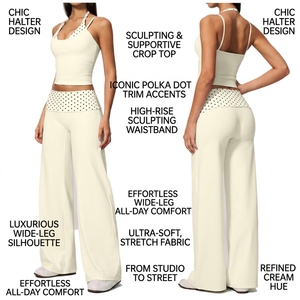
In metropolitan areas like Accra (East Legon, Osu, Airport Residential Area) and Kumasi, fitness culture and wellness movements have driven rapid market adoption of two-piece yoga sets, butt-lifting leggings, quick-dry running suits, and crop-top performance vests.
However, local consumers frequently express frustration with imported Western activewear sizes, which fail to accommodate regional body proportions, specifically requiring larger hip-to-waist ratios, broader gluteal contours, and reinforced crotch gussets to handle intensive training without seam burst. Our specialized pattern grading matrix for Ghana integrates reinforced flatlock stitching allowances and ergonomically contoured waistbands to address these precise consumer pain points.
3.2 Custom Corporate & Promotional Athleisure Programs
From bank marathon events and university sports clubs to private fitness studio franchises across Ghana, B2B procurement managers require custom-branded activewear with reliable sizing. By leveraging our private-label manufacturing infrastructure and technical grading assets, local corporate clients obtain international-standard activewear customized with screen prints, heat transfers, or custom embroidery—shipped directly to their distribution hubs.
Section 4: Technical Comparison Matrix: In-House Manual Drafting vs. Digital Factory CAD Grading
To illustrate the operational advantages of partnering with an advanced pattern grading and marking OEM/ODM factory, consider the performance metrics detailed below:
| Technical Parameter | Traditional Manual Workshop | Our Digital CAD Factory System | Business Impact for Buyer |
|---|---|---|---|
| Grading Accuracy | ± 3.0mm to 5.0mm human variance | ± 0.1mm digitized precision | Eliminates fit discrepancies & returns |
| Average Marker Yield | 72% – 78% material utilization | 87% – 92% optimized AI nesting | Saves 12% to 18% on bulk fabric expenditure |
| Pattern Turnaround | 5 – 7 business days per style | 24 – 48 hours digital output | Dramatically accelerates time-to-market |
| Shrinkage Calculation | Rough manual estimation | Lab-tested ISO warp/weft adjustment | Guarantees dimensional stability post-wash |
| Export Readiness | Paper cutouts (hard to archive) | DXF-AAMA / ASTM / HPGL digital files | Compatible with global cutting facilities |
Section 5: Enterprise Technical Advantage & End-to-End OEM/ODM Supply Chain Solutions
Our manufacturing ecosystem provides a comprehensive suite of services engineered to take apparel concepts from draft sketches to fully finished, packaged inventory ready for retail shelves or wholesale distribution in Ghana and beyond.

5.1 Full-Service Product Development & Tech Packs
Whether you supply a rough hand sketch, a physical reference garment, or a complete digital vector file, our product development department constructs standardized tech packs including Bill of Materials (BOM), measurement specification sheets, points of measure (POM) diagrams, and construction callouts.
5.2 Fabric & Trim Sourcing Network
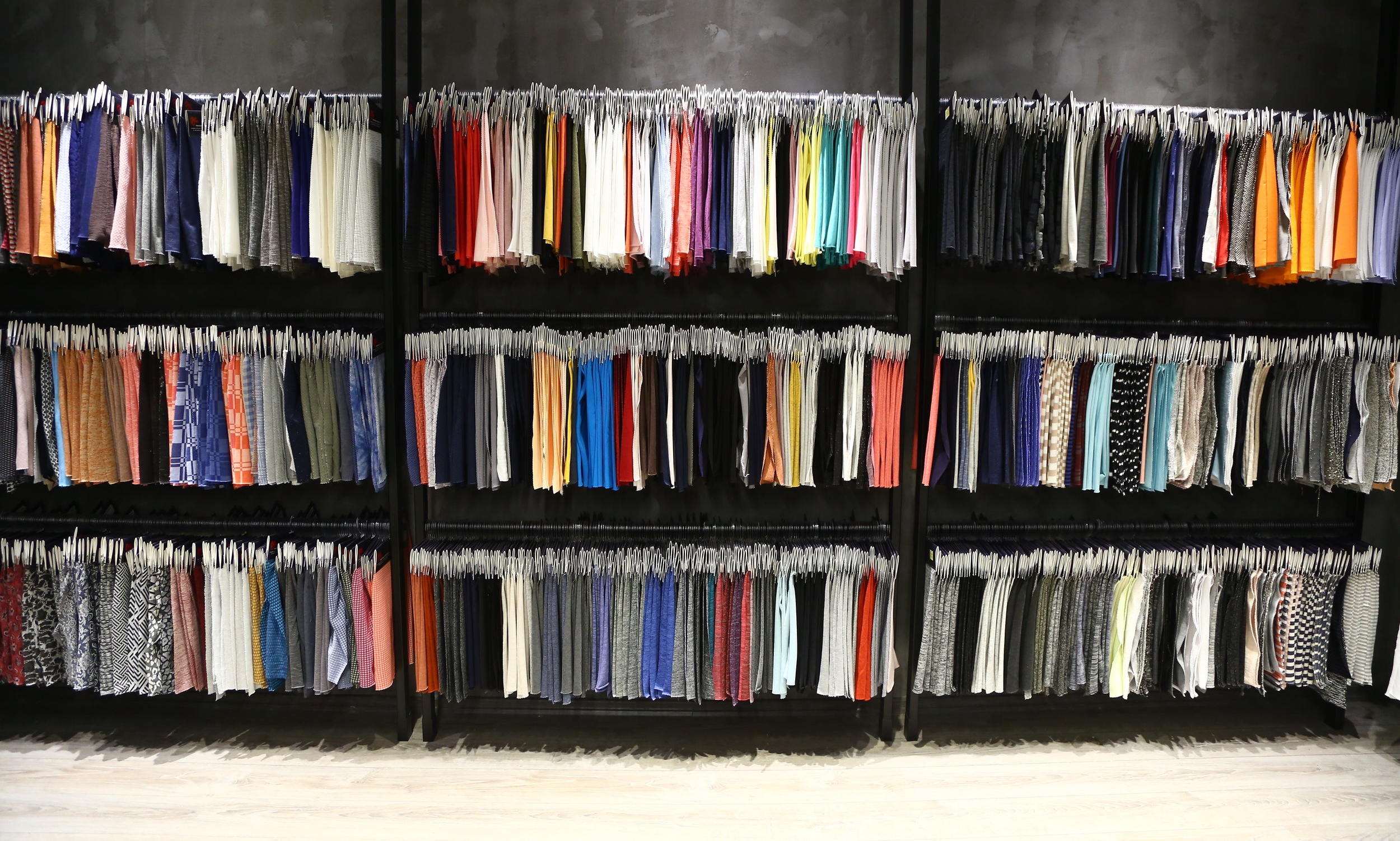
Access over 100+ audited textile mills globally. We source premium nylon-spandex activewear knits, breathable polyester mesh, organic combed cottons, and specialized trimmings (high-grade zippers, heat-seal care labels, custom woven elastic waistbands). All fabrics are verified for colorfastness, anti-pilling properties, and moisture-wicking capabilities.
5.3 Flexible MOQs & Door-to-Door Freight Logistics to Tema / Accra
We understand that emerging fashion brands and regional distributors require low initial minimum order quantities (MOQ) to test consumer demand. Our flexible production lines support small-batch development alongside high-volume continuous manufacturing. Furthermore, our logistics desk manages direct sea freight to Tema Port or express air cargo to Kotoka International Airport (ACC) in Accra, complete with commercial invoices, HS code classifications, and certificate of origin documentation.